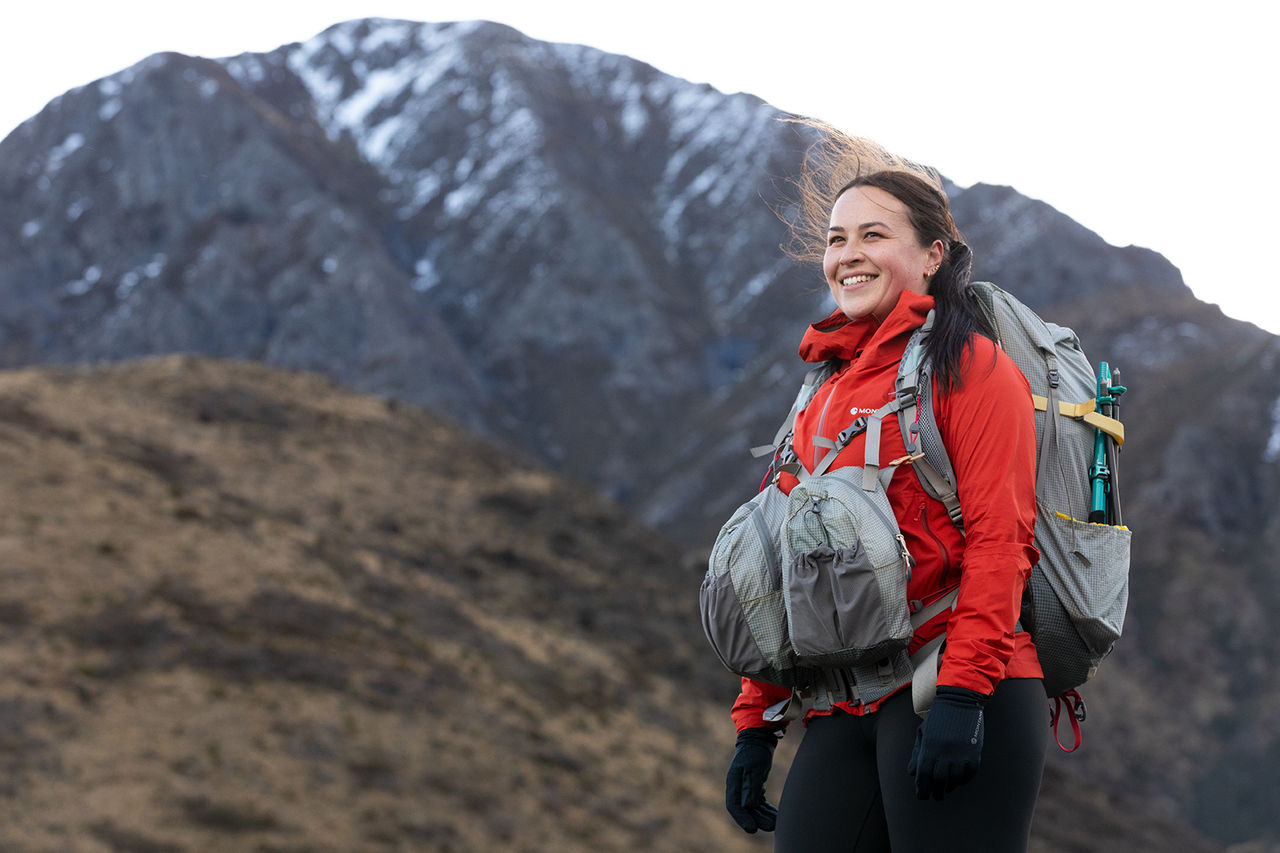


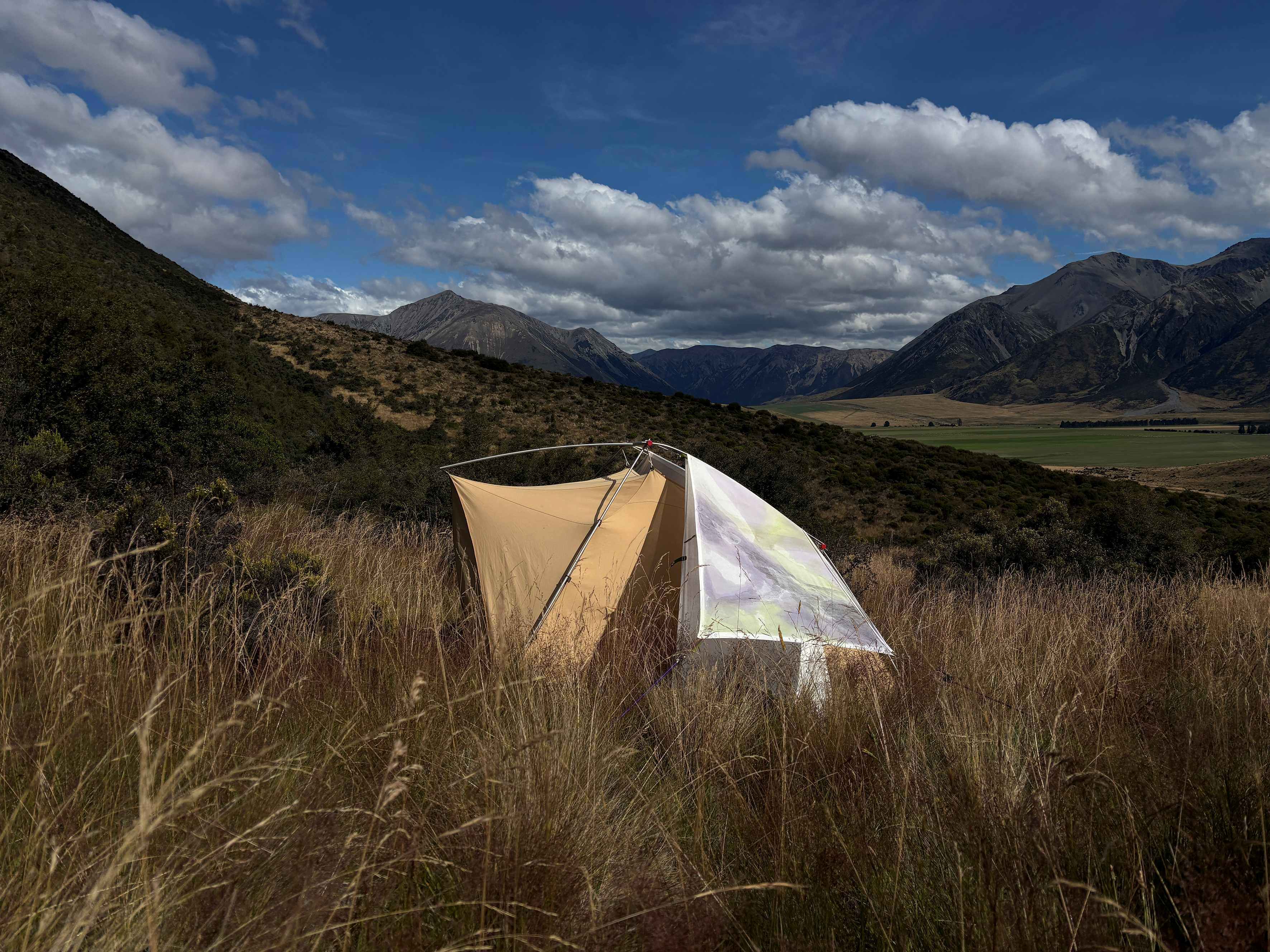
Tramping is one of Aotearoa New Zealand’s most popular outdoor pursuits, with 1.14 million New Zealanders taking at least one tramp in 2021. The activity often involves walking long distances over multiple days while carrying a heavy pack, typically 10–20% of a tramper’s body weight. These loads can significantly influence walking biomechanics, particularly lumbar and cervical spine loading.
Master’s student Timothy Grigg and Dr Sibi Walter from Te Whare Wānanga o Waitaha | University of Canterbury (UC) Faculty of Health and Dr Natalia Kabaliuk from the Department of Mechanical Engineering at the Faculty of Engineering have analysed how different backpack designs affect walking mechanics.
“We often focus on pack size or capacity, but how the load is distributed may be what really matters for comfort and performance on the trail,” Grigg says.
The study compared walking with no backpack, a traditional backpack and a balanced backpack designed with front and back compartments to distribute the weight more evenly, with participants walking on a treadmill on flat, incline and decline gradients while motion-capture technology recorded their movement patterns.
Focusing on lumbar extension (forward lean of the upper body) and centre of pressure (a key indicator of balance and stability during movement), the research findings revealed how load distribution influences a person’s posture on flat, uphill and downhill terrain.
Dr Walter says the results show clear differences between backpack types. “Traditional backpacks place all the load behind the body, which forces trampers to lean forward more to stay balanced. In contrast, the balanced backpack’s front-and-back loading system keeps the centre of gravity closer to its natural position. That means walkers maintain a posture much closer to how they move with no pack at all.”
The study found that using a traditional backpack caused trampers to lean forward significantly and forced them to make bigger balance adjustments, particularly when walking downhill. These compensations increased muscular effort around the spine and hips, contributing to fatigue, discomfort and potential injury risk during long periods of tramping. In contrast, the balanced backpack showed no significant difference from unloaded walking in key posture and stability measures across all gradients.
Dr Kabaliuk says, “Tramping is one of the most popular outdoor activities in Aotearoa but carrying 10–20% of your bodyweight for multiple days can take a biomechanical toll. Our results suggest that a balanced loading approach reduces that strain and may support more efficient, stable walking, especially on uneven or sloped surfaces.”
While this research was carried out in a controlled laboratory setting with a small group of experienced trampers, the findings could help inform both tramping practice and future backpack design, she says.
The UC researchers partnered with a Christchurch outdoors company, Further Faster, to test the different pack designs developed here in Ōtautahi Christchurch. Co-owner Julie-Anne Christy says, “We’ve been using balanced-pack systems in the tramping community for years, and we see the difference they make every day. You move more naturally, you’re not fighting your pack, and you finish the day feeling fresher. Having UC researchers put these designs through rigorous biomechanical testing helps validate what trampers have experienced on the trail for a long time, and it’s great to see local businesses and local scientists working together to improve how people get outdoors.”
Read the full study, here: Laboratory Analysis of Backpack Design and Walking Gradient Effects on Gait Kinetics and Kinematics, is published in Sports (2025).


.png)