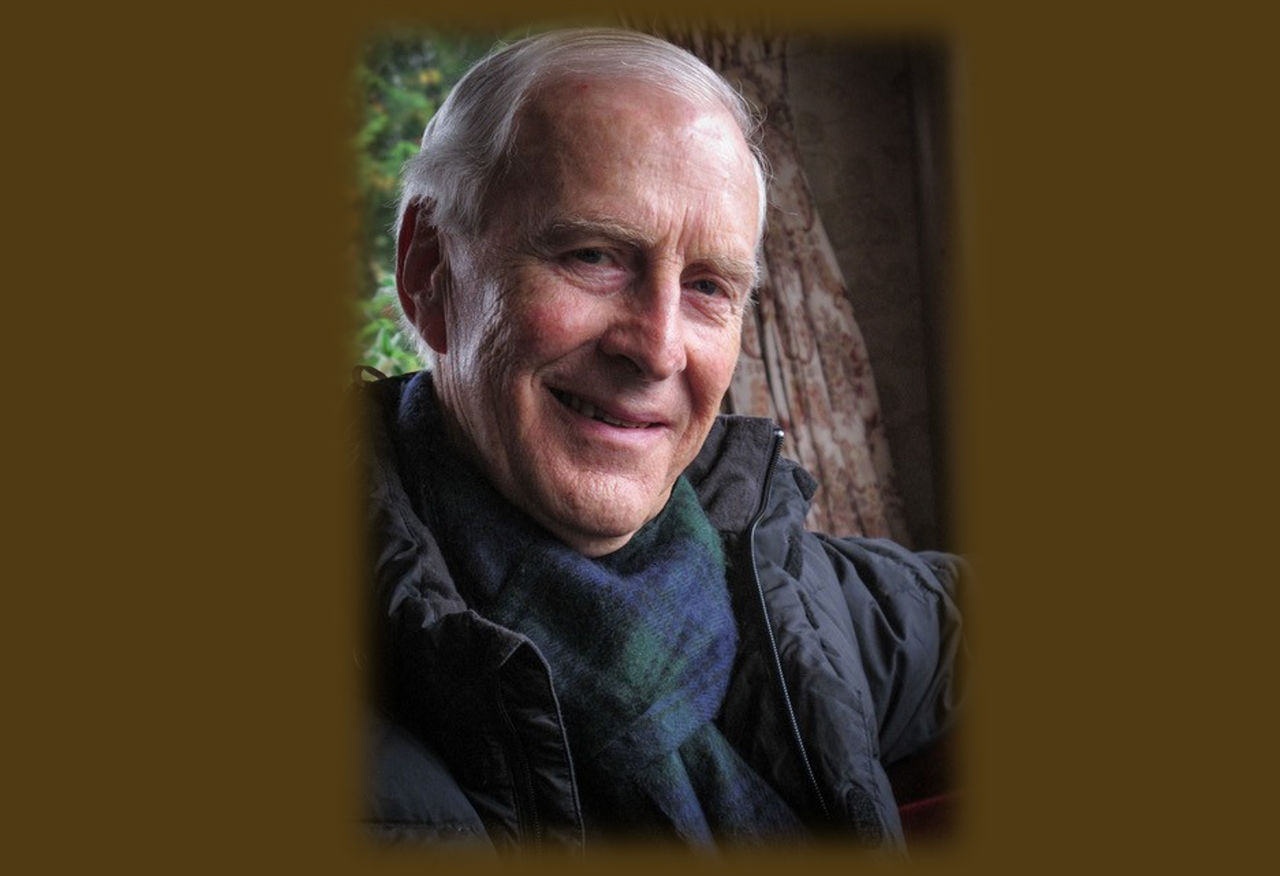


Professor Norman Blaikie is one of UC’s earliest sociology graduates and a pioneer of the discipline in both New Zealand and Australia. Arriving at UC in 1963 as a mature student with a background in surveying, he quickly discovered a passion for sociology that shaped a distinguished academic career spanning Monash University, RMIT University, and the University of Science in Malaysia. A leading figure in social research methodology, he has authored widely used and influential textbooks that continue to shape the field worldwide.
Can you tell us about what drew you to study sociology at UC?
Studying sociology at UC was fortuitous rather than planned but, once I discovered what it was about, it grabbed my interest.
I enrolled at UC at the beginning of 1963 with the aim of completing a BA as an entry requirement to Knox Theological College in Dunedin. I could have done this at Otago but chose UC for family reasons. I was an older student and by then married with two young children. I had spent the previous 12 years as a surveyor, in Southland and Malaya, a profession that required a high level of maths ability. As I had studied mostly maths and sciences at high school, I expected an Arts degree to be challenging. To compensate for this, I chose subjects that were not taught at school; philosophy, psychology and sociology. Of course, I had very little idea of what any of them was about, but they seemed to be interesting and I would not be in classes with young students who were already familiar with the subject matter.
I survived first year and decided to take philosophy and sociology in the second year, eventually majoring in sociology. I could just as easily have majored in the other two subjects, but my prior life experiences made sociology very relevant and meaningful. (Back then, all courses were year-long.)
At the end of third year, I was invited to proceed to a masters degree. While it was not necessary for the career I was pursuing, the idea was very appealing. Given my family situation, and with an additional child by then, financing an extra two years of full-time study was going to be a challenge. However, it was made possible by being offered a part-time tutorship in the department and an agreement to compress the two years - one of coursework and the other of thesis – into one. I did the fieldwork for the thesis while doing the coursework and I intended to write the thesis in the long vacation. I need to point out that there were no fees to contend with then, and I was even entitled to a small book allowance.
Incidentally, my cohort was the second group to major in sociology at UC and four or five them also went on to do the masters degree, the first ever group to do so. We have the honour of being the first New Zealanders to obtain a masters degree in sociology in New Zealand.
An important feature of the sociology program, both undergraduate and masters, was the thorough grounding in social theory and social research. I valued this for the rest of my academic career.
Did you anticipate a career in academia, or did it emerge over time?
No and yes.
During that fourth year I saw an advertisement for positions in sociology at Monash University in Melbourne. After a very nervous start to my university education, I had been able to achieve good results, so an academic career was a possibility. But that wasn’t why I was at university. However, being of an adventurous disposition, and after a very serious discussion with my wife, I decided to apply. I was, of course, aware that such an application was rather premature. However, with a half completed masters degree, I was offered a junior lectureship (called a senior tutorship). It was a tenured position and I had the option, after three years, to return to New Zealand at the university’s expense. With the establishment of new universities in Australia at that time, and particularly in ‘new’ disciplines with few or any home-grown graduates, this was a common arrangement. It allowed me to keep my options open if it didn’t work out.
So, at the end of that year, with a thesis still to be written, we set off to Melbourne. As this first year was very demanding – preparing lectures and learning to be an academic – the thesis writing had to be postponed to the long vacation. It got written and it was submitted in time. Then, I immediately enrolled in a PhD at Monash and completed it in three years. In essence, I had completed two postgraduate degrees in four years, which were more than a full-time commitment on their own.
After 13 years at Monash, and two promotions, I moved to the Royal Melbourne Institute of Technology, now RMIT University, as head of the Department of Social Sciences. Soon after, when RMIT was upgraded from an institute of technology to a fully-fledged university, I became one of the foundation professors. That role was very demanding and lasted for 16 years. I then moved to the University of Science in Malaysia (USM), as Professor of Sociology, for what was intended to be for one year but became seven. Then, in 2002, I retired and returned to New Zealand.
What led you to write your major textbooks? Was there a particular gap you saw in the field?
I was unable to find textbooks that suited my approach to social research, particularly on the philosophy of social research and on how to design research projects.
Both at RMIT and USM I taught required courses in research methodology for postgraduate research students in the social sciences and for others whose research had a social research component. The courses were designed to prepare students for thesis research, many of whom had little or no prior education in or experience of doing research. As I was dissatisfied with the textbooks available, I eventually decided to write one, Approaches to Social Inquiry, published in 1993, while at RMIT. This was followed by Designing Social Research, in 2000, while I was at USM. A second edition of Approaches followed in 2007, and presently, with a co-author, I am working on the fourth edition of Designing Social Research. Along the way, in 2003, at the invitation of a different publisher, I wrote Analyzing Quantitative Data and, with the same co-author, Social Research: Paradigms in Action in 2017. Much earlier, in 1979, my Ph.D thesis was rewritten as a book, The Plight of the Australian Clergy.
Approaches to Social Inquiry focusses on the philosophy of social research and provides a background to Designing Social Research. It, in turn, is further developed in Social Research: Paradigms in Action. They constitute a series, while Analyzing Quantitative Data deals with a later stage in the research process. I intended to write a book on my particular approach to qualitative research but, with advancing years, that is now very unlikely. I have to be content with what I have said on this in the other books and other publications.
What are you most proud of when I look back on my career?
I hope I have made a contribution to the education of my students, that I have challenged them, extended them, inspired them to widen their intellectual horizons and maybe to think differently. Many of them tell me I have. And I think I have also made a contribution to the way social research is designed and conducted.
It is amazing that an academic career ever happened. University teaching and research are two very challenging but satisfying pursuits. I am very thankful for having had the opportunity to do both and to have contributed to the education of so many students, at all levels. I have taken a rather iconoclastic approach in my publications, but it seems to have taken many years for these ideas to have had a wide influence. This is illustrated in my most accessed and cited publication, an article published in 1991 in which I explore some of these ideas. I have been told that my books and other publications have been influential, particularly in the UK where all the textbooks have been published. My publications are accessed all around the world, usually several times a day!
In addition to being a pioneer in sociology at UC, I was also one in Australia. When I arrived in Melbourne, sociology at Monash University had only been offered for three years, being the first sociology programme in Victoria. The university had been operating for only about five years. I also have the honour of having the first Ph.D in sociology in Victoria, to someone who had previously completed degrees in the discipline.
Being a pioneer might be regarded as a disadvantage, but I think it has had two advantages. First, as you have few, if any, role models, you must develop independent attitudes and skills and you just have to work things out for yourself. Second, being educated at the southern extremes of the world, and at a distance from the mains centres of the discipline, in the US and Europe in particular, my ideas were not constrained by having to follow one of the dominant traditions. This provided the freedom to appreciate and critique them all and to develop my own approach.
Looking back to your UC days, what memories stand out most?
It was a great time to be a student, the experience changed me fundamentally and it provided the foundation for a very satisfying academic career.
I look back on my time at UC with great appreciation for the kind of education I received. As sociology had only just been introduced, we had lecturers who were both local and from around the world, in particular, from Europe and the US. Hence, we were introduced to a range of traditions in the discipline. But it was also the culture that these lecturers had created. They challenged, inspired and supported us and eventually regarded us as colleagues. I had the luxury of being able to study full-time and to only work in the long vacations. Mainly because of family responsibilities, the initial anxiety of returning to study, and concern about the cost and consequences of failing anything, I chose not to be involved in the usual undergraduate student activities. But studying year-long courses provided time to develop understanding of the disciplines, and to discuss and debate ideas informally with fellow students. In addition, in later years, the collegiality of staff created a great learning environment.
Studying philosophy for two years provided me with knowledge and ideas that I have found extremely useful in so many ways, two components in particular, the philosophy of science and the philosophy of religion. Consequently, the ‘philosophy of social research’ became my main academic interest.
I must say something about the language requirement at UC. Back then, all New Zealand universities had a language requirement in BA degrees, but all except UC required the study of a foreign language. Throughout my education I had managed to avoid language study, something I have since regretted. I was delighted to discover that, at UC, English satisfied this requirement. However, I arrived with a prejudice against even this. In my family, there were always more important thing to be done than reading novels and I had an English teacher at high school who completely turned me off the subject. I decided to delay enrolling in English until the third year only to discover how stimulating and enjoyable the course was. Had I done it earlier, I might have enrolled in another year.
A classmate from those years, who later became a colleague at Monash, often reflects with me on our good fortune in when, where and how we were students. Student life and learning is now so very different. The need to work while studying full-time, the fragmented learning experience of semester-length courses, and limited time and opportunity to interact with fellow students, creates a totally different experience. Ours were the ‘good old days’, but then this is an old man reminiscing!