.png/_jcr_content/renditions/cq5dam.web.1280.1280.jpeg)


Idaho State University has a rapidly growing research enterprise. How does your role as Associate Vice President for Research: Innovation Partnerships support and advance this growth?
In my leadership role as Associate Vice President for Research, Innovation Partnerships in the Office for Research at Idaho State University (ISU), I provide strategic support to bridge the gap between academic discovery and private innovation. I engage faculty across all disciplines to identify external funding opportunities, strengthen collaborations with industry, national laboratories such as the United States Department of Energy’s Idaho National Laboratory, and peer institutions, and support the development of intellectual property. By fostering interdisciplinary partnerships and helping faculty translate research into practical solutions, I advance ISU’s growing research enterprise while promoting economic development and enhancing the university’s national and international profile. This role leverages my background in academia, industry, and national laboratories to ensure that our research growth is guided by meaningful engagement, collaboration, and real-world impact.
You are also a Professor of Structural and Earthquake Engineering and the Founder of Idaho State University’s Structural Laboratories and Disaster Response Complex. What first sparked your interest in this field and what continues to motivate your work today?
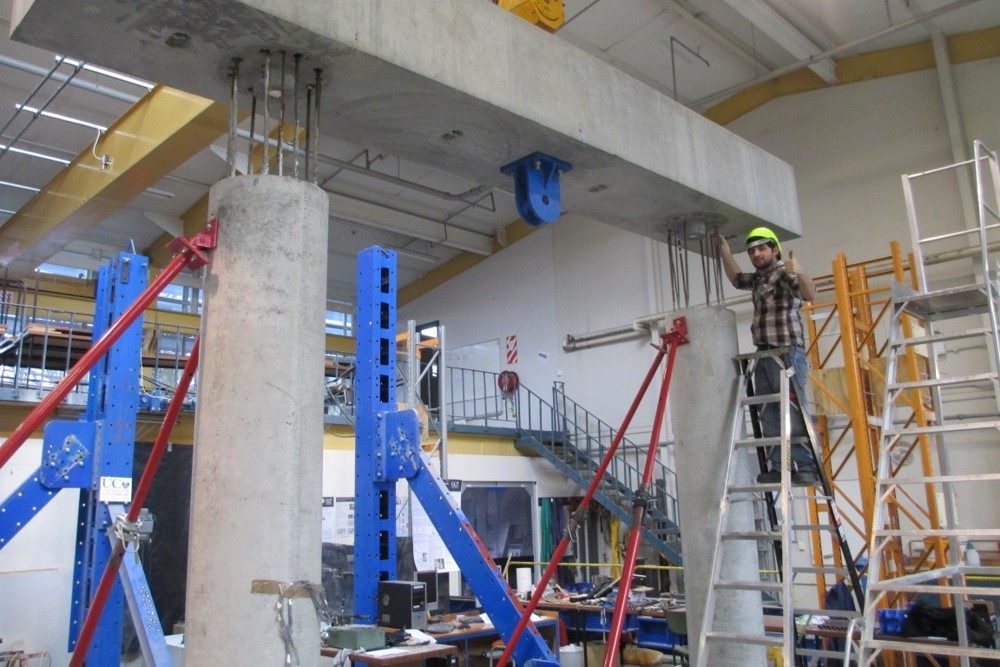
My interest in structural and earthquake engineering was sparked by growing up in Afghanistan, an earthquake‑prone country, where I saw firsthand how vulnerable communities are when infrastructure fails. From an early age, I became fascinated with how materials and structural systems respond to extreme loads and how better design can save lives and enhance resilience. Today, I am motivated by the opportunity to train the next generation of engineers and to advance research that directly improves infrastructure performance and community safety. At Idaho State University, I’ve led the development of unique facilities such as the Structural Laboratories (SLAB), which enables large‑scale testing to study structural behavior under various loading conditions, and the Disaster Response Complex (DRC), which supports research, emergency responder training, and curriculum development in realistic disaster scenarios. While I currently do not have any formal faculty expectations, I actively participate in research activities, mentor both graduate and undergraduate students, and contribute to the civil engineering profession through service on national standards and other committees in Transportation Research Board (TRB), American Society of Civil Engineers (ASCE), Precast/Prestressed Concrete Institute (PCI) and others. These activities allow me to continue advancing knowledge, learning from peers, shaping the next generation of civil engineers, and strengthening infrastructure resilience and disaster preparedness.
Your research has been implemented in award-winning real-world structures across New Zealand, the United States, and other regions globally. Can you tell us a little about some of these projects?
One of the recent research projects I am particularly proud of is the Fort Hall Interchange Bridge over I-15 in Southeast Idaho. Our work on precast concrete pier systems directly informed the bridge’s design and construction. Sponsored by the Idaho Transportation Department, this research contributed to the project receiving the 2024 High Value Research Award from the American Association of State Highway and Transportation Officials (AASHTO), which recognizes research that delivers significant benefits to transportation agencies through innovation, cost savings, and enhanced performance across the transportation sector.
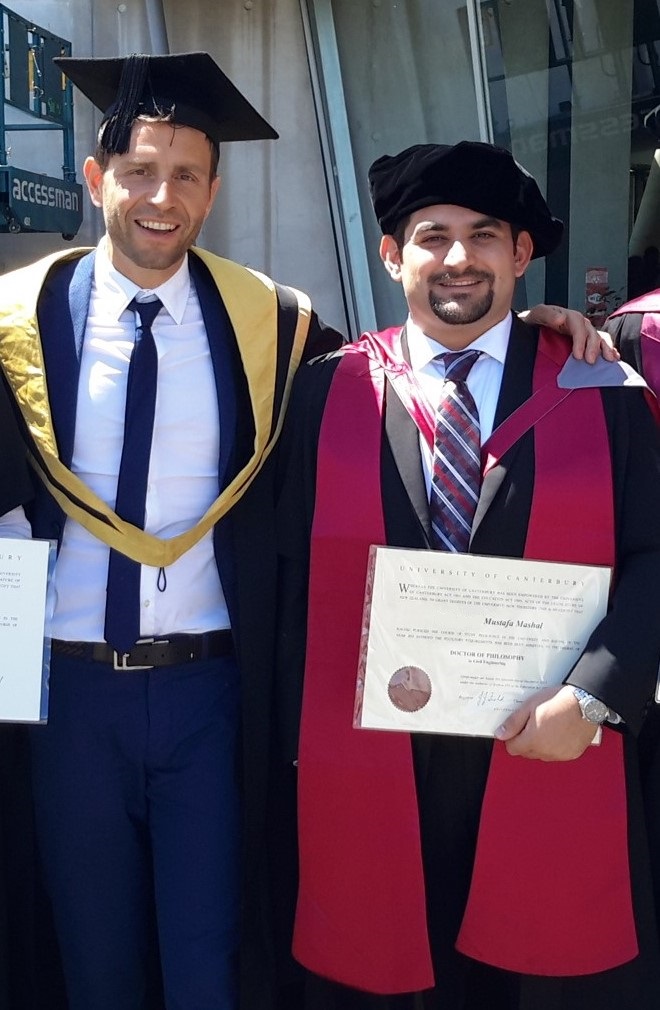
Another key project is the Wigram–Magdala Link Bridge in Christchurch, New Zealand, which employs the technology central to my PhD research under Professors Alessandro Palermo and Allan Scott at UC. Completed in 2016, this bridge remains the world’s only dissipative-controlled rocking bridge, designed to deliver superior seismic performance and rapid post-earthquake functionality compared to traditional cast-in-place construction. This work was recognized with the 2020 Alfred Noble Prize from the American Society of Civil Engineers, awarded for outstanding original contributions to engineering practice.
These projects demonstrate how rigorous laboratory research can be translated into real-world implementation, enhancing the safety, resilience, and longevity of critical infrastructure in seismically active regions. Collectively, my work emphasizes accelerated construction, low-damage seismic performance, and improved durability. More recently, I have expanded my research portfolio to include energy, environmental security, machine learning, artificial intelligence, and additive manufacturing.