Menu

Wananga Landing
Profile image
Topic

Waste and circular economy

08 September 2026

All UC staff and students can help minimise waste by sorting rubbish correctly. Learn more about how to minimise waste on campus and beyond.

HOW TO APPLY

From 1 February 2024, new national standards to kerbside bin collections are in place, which means a consistent approach to how we sort recycling, organics and rubbish across Aotearoa New Zealand.

The new national standards have bought about some changes to what is accepted in what bin on campus. 

ItemNow goes in 
Empty pizza boxes (without food scraps)
Recycling | Hangarua 
Tea bags Landfill | Para 
Soiled paper (including dirty napkins)Landfill | Para 
All takeaway packaging, including any food/drink containers marked "compostable" or "bioplastic". This includes coffee cups. Landfill | Para 

All staff and students can make a difference by sorting their waste correctly to minimise the contamination of our waste streams.

It is extremely important that all food, food scraps and organic material are placed in the green organics bin, and not in the red landfill bins. 

Learn more about waste management and minimisation at UC below.

Lids

If you would like to recycle your lids, a team at the Ernest Rutherford building has developed an amazing lid recycling station. Items collected here go to various specific recycling streams. The station is located in the foyer of Ernest Rutherford at the south entrance. 
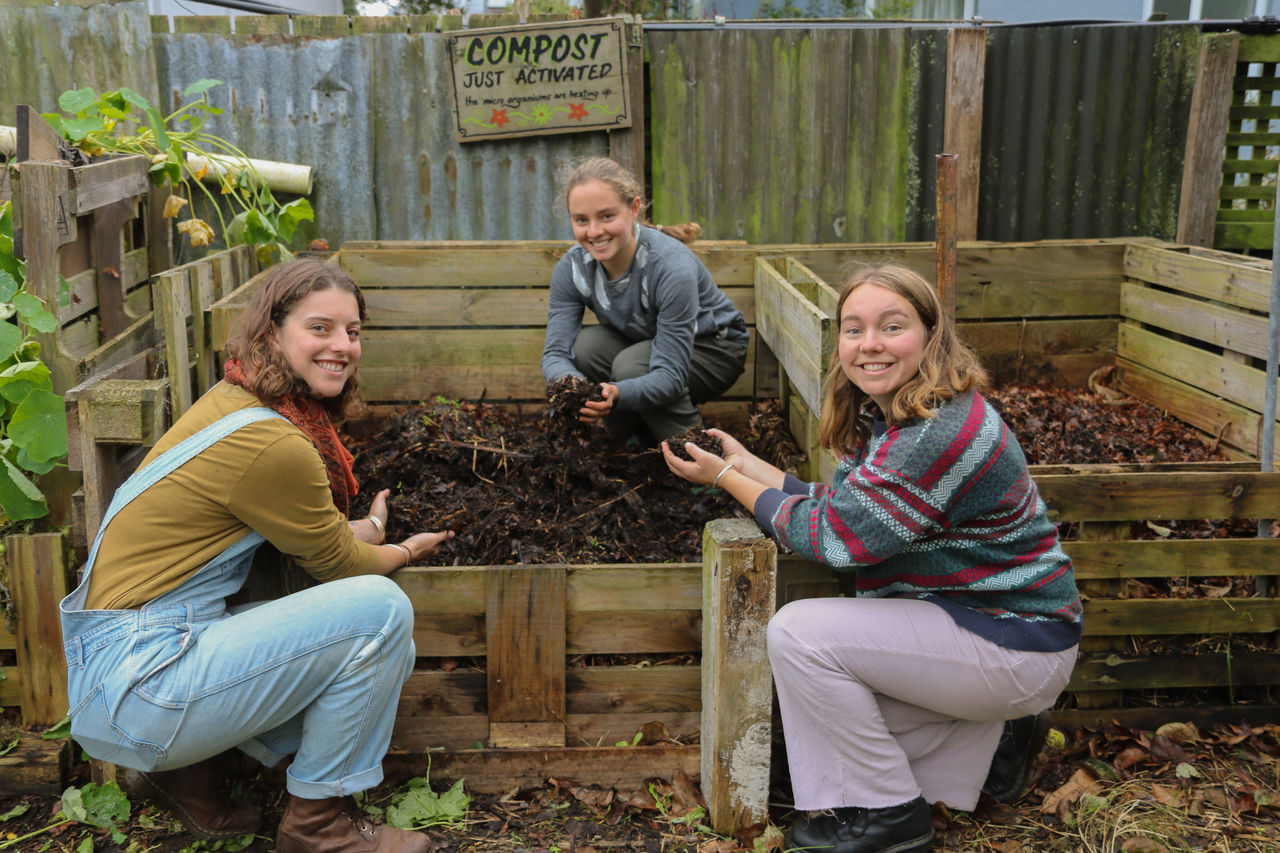
 

Turning food scraps and organic waste into compost significantly reduces the volume of waste sent to landfill, making it an important waste minimisation tool. Compost can then be used by gardeners to improve soil fertility and structure.

Food and organic waste generated at UC is taken offsite and made into compost.

You can put all food scraps and organic material in the green wheelie organics bins and small bench top containers in staff kitchens.

Allowable items:

  • Fruit and peels
  • Sandwiches
  • Cakes
  • Meat
  • Coffee grounds
  • Flowers
  • Any other plant material
  • All food waste (both raw and cooked)
Not allowed in the organic bins
  • No pizza boxes
  • No tea bags
  • No takeaway food/drink packaging, even if marked "compostable" or "bioplastic"
  • No cardboard or paper

UC's worm farm was launched during International Compost Awareness Week to trial a form of localised composting on campus. It is a collaboration between Te Ngaki o Waiutuutu (Waiutuutu Community Garden), UC Compost Club, UC Sustainability and UCSA. The  student-led Compost Club collects a bucket of food scraps every week from the UCSA kitchen.

Along with the bacteria and micro-organisms, the worms break down the food into worm castings, which is a nutrient-rich compost that can be used on our campus gardens. 

20kgs of food waste has been diverted and placed in the worm farm since May 2023. It takes time to build up the numbers and castings. There is a plan to expand the worm farms in 2024, and look to collect food waste from university accomodation.

UC Waste Audit 2024

For more information on our waste system
Download (application/pdf, 3 MB)
Download

For any queries about these changes, please contact Sustainability Office.

Privacy Preferences

By clicking "Accept All Cookies", you agree to the storing of cookies on your device to enhance site navigation, analyse site usage, and assist in our marketing efforts.