

Formulated products can vary across a broad range – from personal care products and over-the-counter pharmaceuticals to household and agricultural chemicals.
Taught in a combination of lectures, labs, practical workshops, and field trips, Chemical Formulation Design offers a balance of design and business with science and technology to produce well-rounded and highly sought graduates.
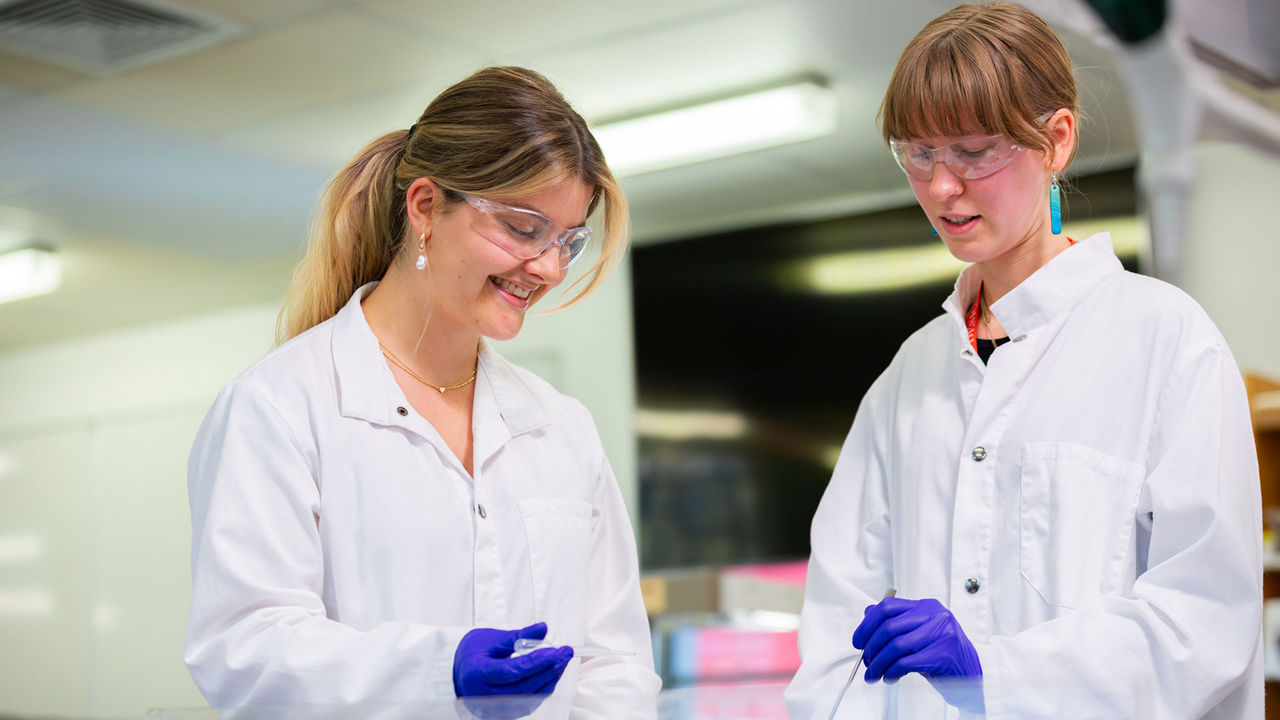
You will learn to use an array of state-of-the-art equipment in the formulation, food, fragrance, and research labs.
During your study, you'll develop skills and knowledge in the following areas:
- Product design processes
- Formulation science
- Chemical and functional properties of formulated products
- Creative design of packaging and promotional materials
- Market analysis and matching customer values
- Sustainability, ethics, and cultural aspects
- Fragrance design
- Hands-on product prototyping
- Commercial production methods
- Computer aided design, Photoshop, InDesign, Illustrator, 3D modelling
- Process economics.
Watch videos from our students
Hannah talks about the inter-disciplinary nature of Product Design and her focus on personal care products.
Heath
Heath shares how his passions for design and perfume came together for his ideal career path.
Kyra
Kyra explains the product design process with her study focused on formulating pharmaceutical products.
- Hands-on experience formulating a variety of chemical products – from weedkillers, paints, and detergents, to nutritional supplements, lipsticks, sunscreens, and shampoos.
- Develop a comprehensive set of skills and expertise across science, design, and business.
- Access a vast array of industry-standard facilities and laboratories for chemical product formulation, manufacturing, testing, and analysis.
- Develop direct connections to industry and Mātauranga Māori experts via field trips, guest lectures, and laboratories.
- Collaborate with the chemical formulation industry in Aotearoa through industry-sponsored projects throughout your degree.
- Hands-on experience formulating a variety of chemical products – from weedkillers, paints, and detergents, to nutritional supplements, lipsticks, sunscreens, and shampoos.
- Develop a comprehensive set of skills and expertise across science, design, and business.
- Access a vast array of industry-standard facilities and laboratories for chemical product formulation, manufacturing, testing, and analysis.
- Develop direct connections to industry and Mātauranga Māori experts via field trips, guest lectures, and laboratories.
- Collaborate with the chemical formulation industry in Aotearoa through industry-sponsored projects throughout your degree.
In your first year, you will study the basics of the Chemical Formulation Design process and learn practical formulation techniques as well as core knowledge in chemistry, biology, and design concepts.
Our dedicated facilities offer plenty of tools for creativity to help you start building a portfolio of work and begin formulating products right from the start of your degree.
During your study, you’ll develop skills and knowledge in areas such as:
- Product design process
- Physical properties of formulated products
- Chemical properties of formulated products
- Functional properties of formulated products
- Methods of analysis
- Commercial production
- Testing
- Process economics.
In your first year, you will study the basics of the Chemical Formulation Design process and learn practical formulation techniques as well as core knowledge in chemistry, biology, and design concepts.
Our dedicated facilities offer plenty of tools for creativity to help you start building a portfolio of work and begin formulating products right from the start of your degree.
During your study, you’ll develop skills and knowledge in areas such as:
- Product design process
- Physical properties of formulated products
- Chemical properties of formulated products
- Functional properties of formulated products
- Methods of analysis
- Commercial production
- Testing
- Process economics.
A degree in Chemical Formulation Design could lead to a career in product formulation and manufacturing or, more broadly, into any industry that employs graduates with a scientific background.
Career opportunities could include:
- Formulation chemist
- Quality and operations scientist
- Product development scientist
- Quality manager/chemist
- Laboratory technician
- Product manufacturing manager
Find out more about what you can do with a degree in Chemical Formulation Design.
A degree in Chemical Formulation Design could lead to a career in product formulation and manufacturing or, more broadly, into any industry that employs graduates with a scientific background.
Career opportunities could include:
- Formulation chemist
- Quality and operations scientist
- Product development scientist
- Quality manager/chemist
- Laboratory technician
- Product manufacturing manager
Find out more about what you can do with a degree in Chemical Formulation Design.
Entry to the Chemical Formulation Design major is open to anyone with entry to the University.
However, it is strongly recommended that you have at least 14 credits in NCEA Level 2 science and mathematics (passed AS level Mathematics in CIE or achieved a 4 SL Maths for IB) and 14 credits in NCEA Level 3 chemistry (D grade in A level or A grade in AS level Chemistry in CIE or achieved a 4 HL or 6 SL Chemistry for IB).
Secondary school studies in related subjects such as digital technologies, technology, or design and visual communication would be an advantage.
Entry to the Chemical Formulation Design major is open to anyone with entry to the University.
However, it is strongly recommended that you have at least 14 credits in NCEA Level 2 science and mathematics (passed AS level Mathematics in CIE or achieved a 4 SL Maths for IB) and 14 credits in NCEA Level 3 chemistry (D grade in A level or A grade in AS level Chemistry in CIE or achieved a 4 HL or 6 SL Chemistry for IB).
Secondary school studies in related subjects such as digital technologies, technology, or design and visual communication would be an advantage.

