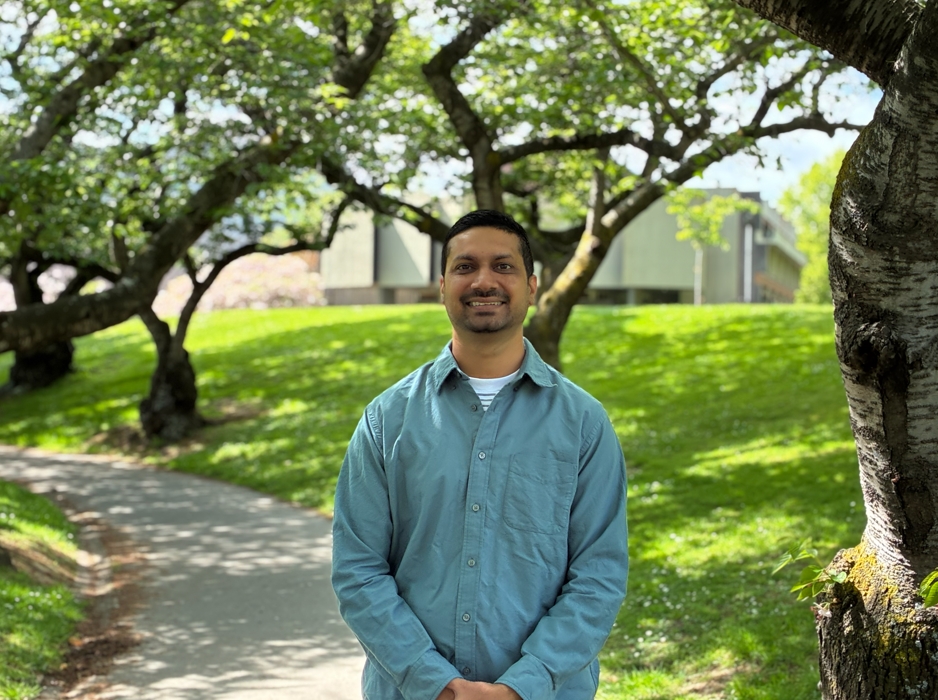

Te Kāhui-a-Te-Rū-Rangahau, based in the School of Teacher Education at Te Whare Wānanga o Waitaha | University of Canterbury (UC), has been recognised for its pioneering work in education, winning the Te Rangaunua Hiranga Māori Medal for co-creating resources that empower culturally-responsive teaching in Aotearoa New Zealand.
The Te Rangaunua Hiranga Māori Medal is awarded by the Royal Society Te Apārangi every two years in recognition of excellent, innovative co-created research, conducted by Māori, that has made a distinctive contribution to community wellbeing and development in Aotearoa.
The team’s award-winning work includes the Hikairo Schema book series and its tertiary companion volume, Ngā Hau e Whā o Tāwhirimātea, which are practical guides designed with and for kaiako (teachers) to bridge the gap between educational theory and teaching practice.
The Hikairo Schema books support teachers across early childhood, primary, intermediate and secondary school levels, and have been widely adopted in Aotearoa New Zealand as part of the Better Start Literacy Approach, as well as used internationally. An open-access resource, Ngā Hau e Whā o Tāwhirimātea is tailored for teaching undergraduate and postgraduate learners.
Together, these guides offer developmentally appropriate, evidence-based strategies to enhance teaching practice and promote inclusive, mana-enhancing learning environments. They provide teachers with practical tools to apply theoretical principles at a pace that is achievable, enabling both educators and learners to benefit from culturally grounded approaches.
UC Adjunct Associate Professor Sonja Macfarlane FRSNZ (Ngāi Tahu, Ngāti Waewae) explains that the resources were inspired by ‘The Hikairo Rationale’, a framework developed in the 1990s by the late Professor Angus Hikairo Macfarlane FRSNZ (Ngāti Rangiwewehi, Ngāti Whakaue).
“Over many years, Angus shared the doctrine of this framework with teachers and educators, who often asked him how they could apply the theory in practice. Motivated by these queries, he refined the framework into The Hikairo Schema and, in 2016, gathered colleagues to create a series of practical handbooks,” Associate Professor Macfarlane says.
“His vision was to create resources that could encourage, empower and support teachers and educators across all education contexts to embed culturally-responsive pedagogies within their everyday practice.”
The Te Kāhui-a-Te-Rū-Rangahau team includes:
Ms Jennifer Smith (Ngāti Whātua, Te Roroa, Ngāpuhi)
Associate Professor Sonja Macfarlane FRSNZ (Ngāi Tahu, Ngāti Waewae)
Associate Professor Te Hurinui Renata Karaka-Clarke MRSNZ (Te Arawa, Ngāi Tahu)
Dr Matiu Rātima (Whakatōhea, Ngāti Pūkeko)
“Winning this medal not only affirms the work of so many dedicated and caring people, but it acknowledges the ground-breaking legacy that Angus gifted to us all,” Associate Professor Macfarlane says. “His vision saw more than can ever be captured in mere words; it was one which saw unwavering strength and hope, even during times of adversity, and it is reflective of his favourite whakataukī: He moana pukepuke e ekengia e te waka—a choppy sea can be navigated.”


What to read next
UC geography graduate honoured for global science leadership
UC alumnus Distinguished Professor Emeritus Iain Hay has received a prestigious international Fellowship recognising his contributions to geography and scientific collaboration.
Are Kiwi businesses jumping blindly on the AI bandwagon?
AI doesn’t have to play an inevitably dominant role in our lives, businesses and future, argues a guest speaker for an upcoming UC public lecture.
UC engineering students win international competition
A robot designed to transport rocks automatically has helped four UC engineering students claim an international title.
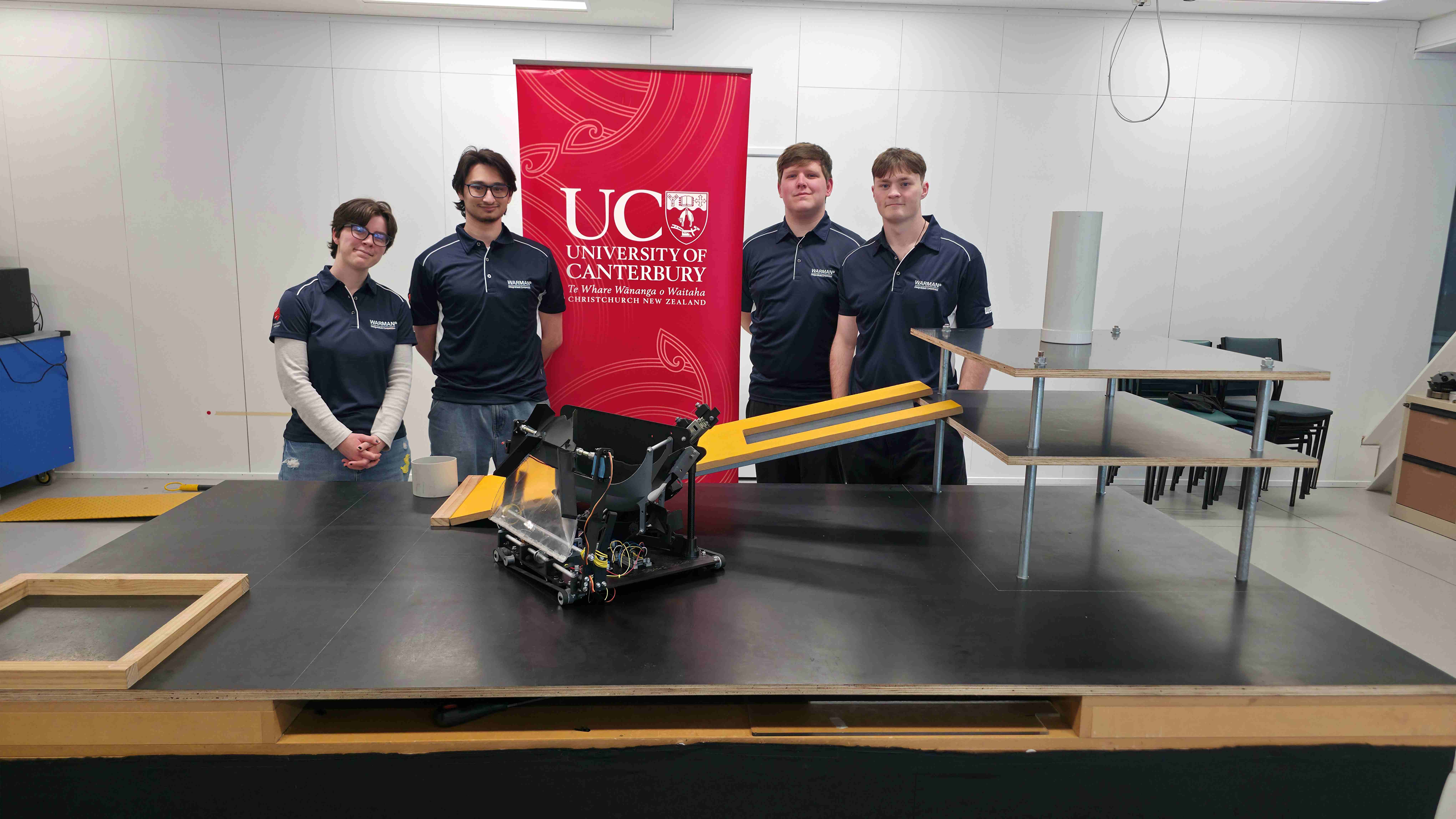
UC wins national award for employability service
UC has been recognised for excellence in helping students develop career-ready skills and connect with employers.
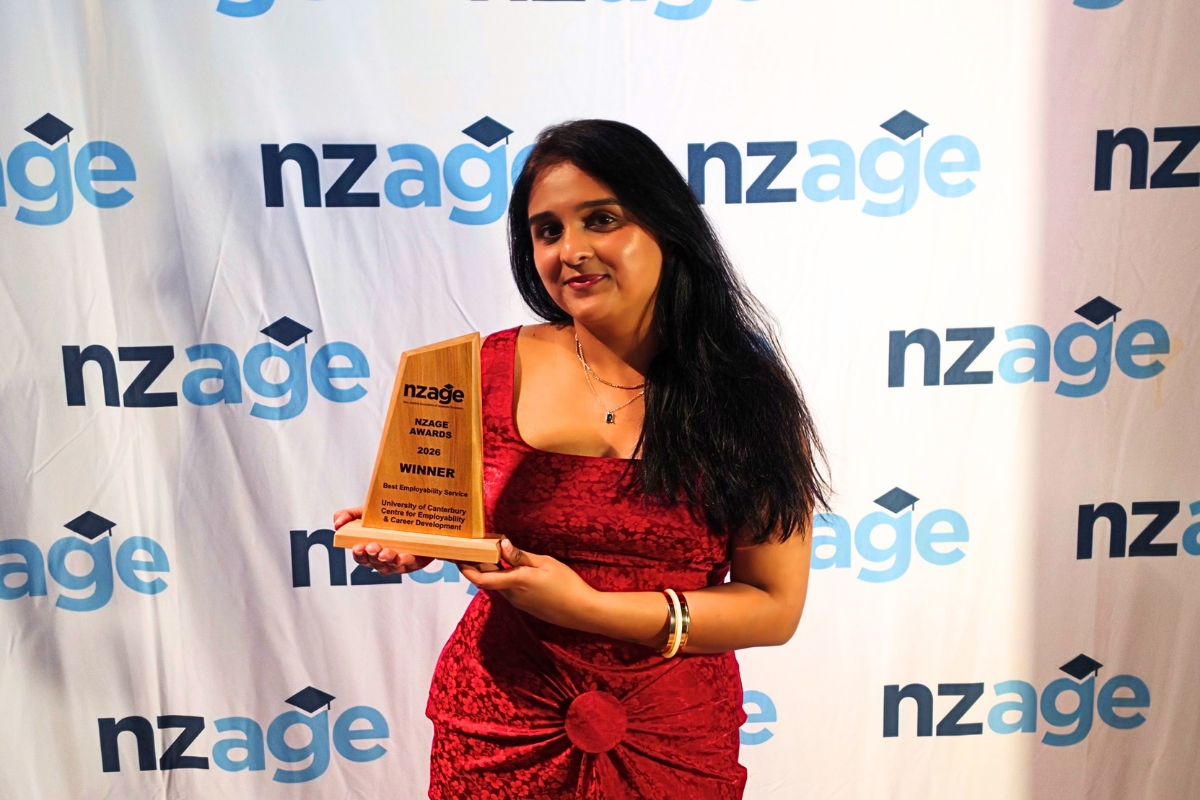
Fair suppliers strengthen business resilience
Businesses are better able to withstand disruption when suppliers make fair decisions and turn strong relationships into flexible action, UC research finds.
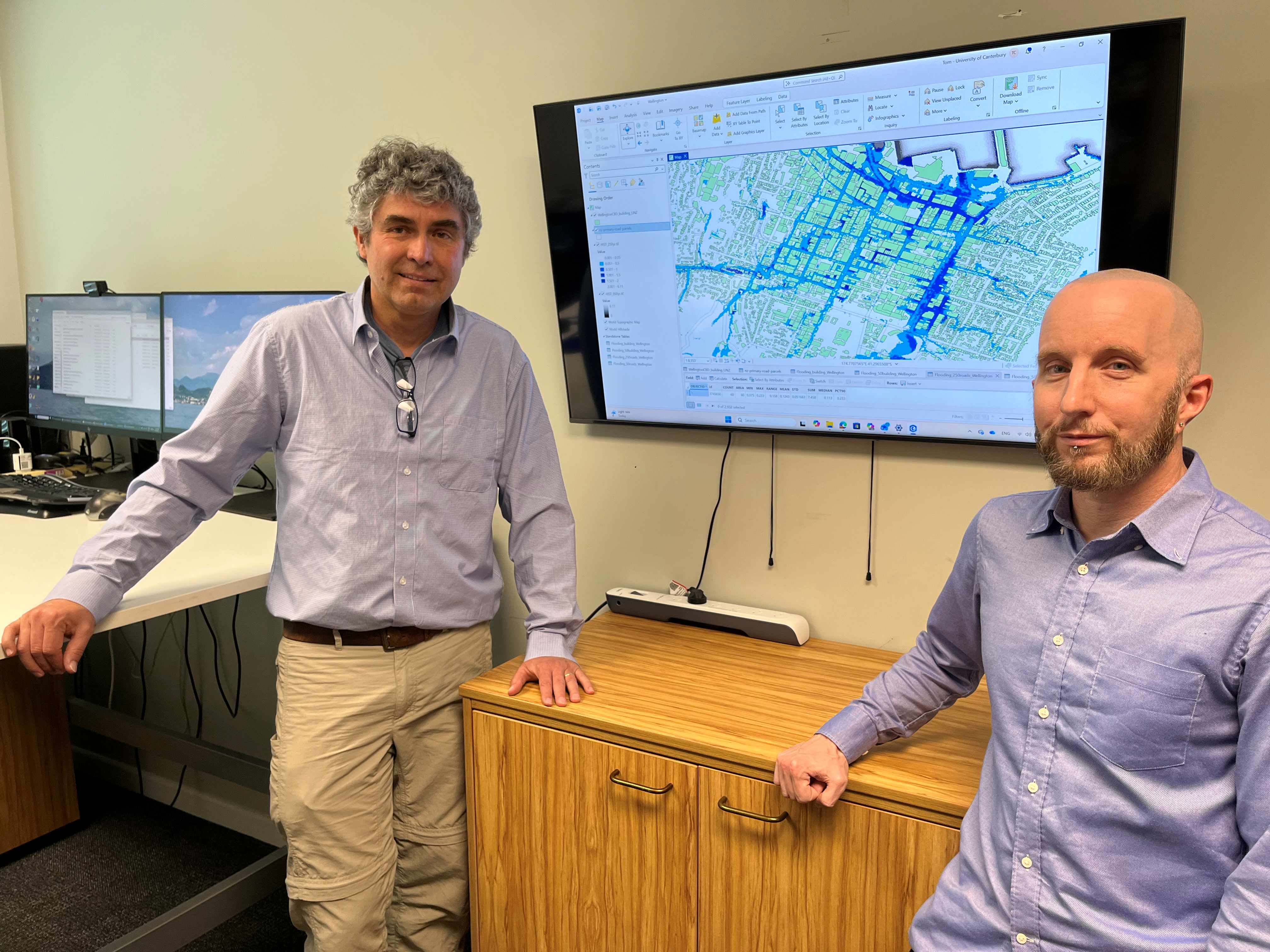
Digital models to help predict natural hazards in Kiwi capital
An innovative project using digital simulations to predict future hazards in New Zealand’s capital city takes its name from science fiction.
UC research challenges how we think autistic children learn
New UC research is challenging assumptions about how autistic children learn language.
Tiny robots, big potential: UC PhD explores new frontier
A UC researcher is pioneering laser-controlled robot swarms thinner than a human hair — work he believes could one day transform medicine and manufacturing.
UC research puts local knowledge at heart of resilience
UC research explores how Pacific Island nations can better use place-based knowledge to strengthen disaster planning and resilience.