Menu

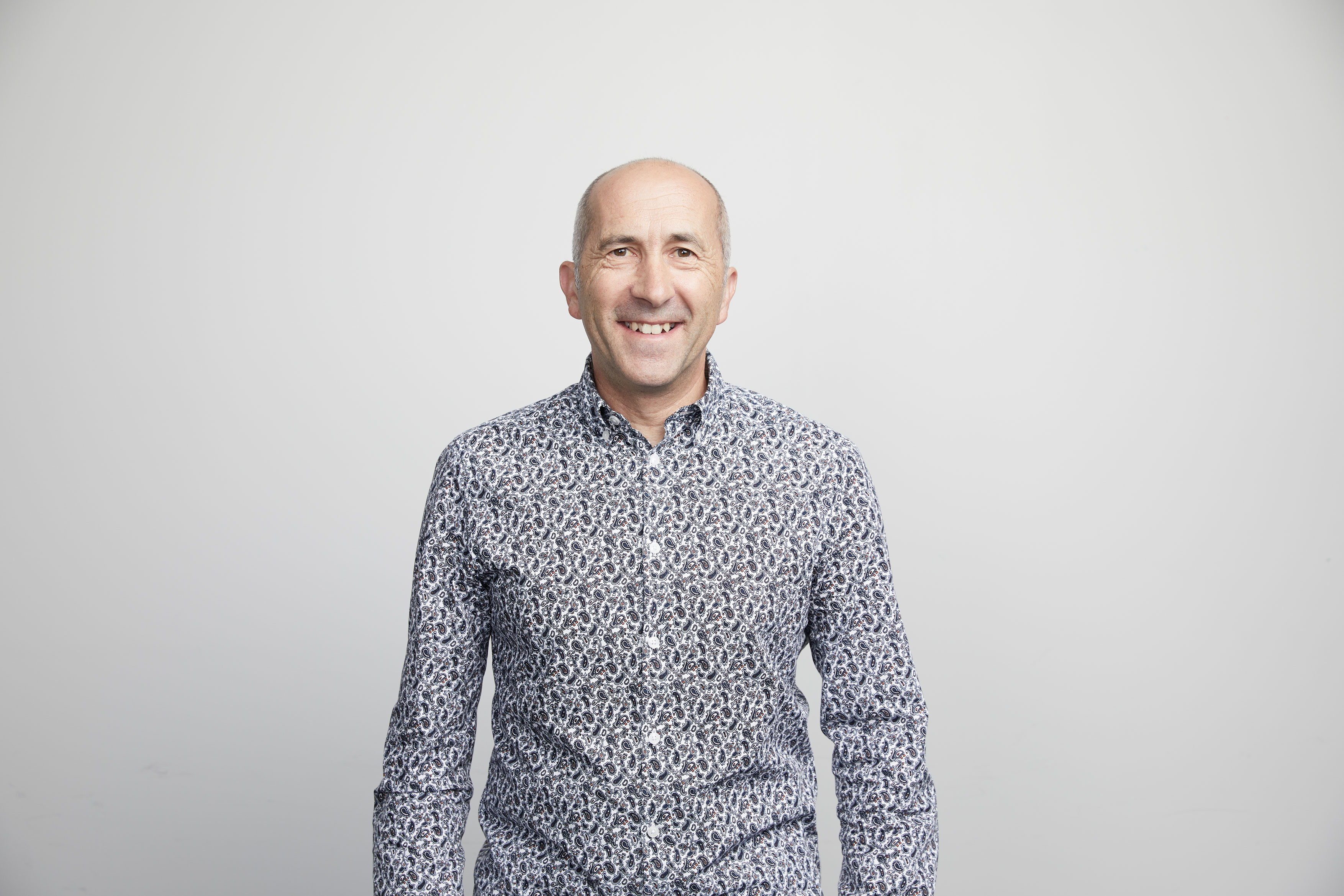
Dr Aulia Aruan
Dr Aulia Aruan
Wananga Landing
Alumni story

Aulia Aruan

11 March 2026

MForSc Forestry 1991

PhD Forestry 1997


Forestry scholar and climate governance leader

HOW TO APPLY

With more than four decades of experience, Aulia has worked at the intersection of forestry science, climate policy, and public governance. Throughout his career, Aulia has helped to connect ecological integrity, national development priorities, and practical systems on the ground.


Tell us, what stand out as some of your career highlights or defining moments?

My academic training at the University of Canterbury between 1988 and 1996 strongly shaped how I think about forestry. It gave me a solid scientific foundation and reinforced the importance of evidence-based policy. Over time, I saw clearly that forestry was no longer only technical work, becoming closely tied to national development and climate commitments.

A key turning point for me was moving from field-based forestry into governance and policy formulation. With support from scholarships in Indonesia and New Zealand, I began translating field realities into regulations, programs, and institutional mechanisms within Indonesia.

One major highlight has been my involvement in Indonesia’s climate agenda, particularly the FOLU Net Sink 2030 initiative. I contributed to the implementation of its first Resource-Based Payment model, helping align forest protection, emission reduction, and community livelihoods within a national framework.

I have also spent many years bringing together ministries, local governments, civil society, academics, and international partners around shared environmental goals. Alongside this, I have mentored young professionals and remain active in alumni networks, including serving as UC Ambassador for Indonesia.

Could you share a little about your current role and what you find most rewarding in the work you’re doing now?

I currently serve as an expert on Sustainable Forest Management in the Project Management Unit of the FOLU Norway Contribution Phase 1.

My work focuses on governance, coordination, and ensuring that climate targets are supported by credible systems and reliable data. While I’m not involved in the direct execution of projects, I instead play a crucial role in guiding and reviewing how implementing partners operate, helping ensure alignment with national priorities and long-term commitments.

What I find most rewarding is seeing complex systems begin to work more coherently. It is encouraging when policies reflect ecological limits and social realities, when forests are no longer treated solely as “resources,” but as living systems central to climate resilience, livelihoods, and national identity. I also get a deep sense of fulfilment in seeing younger professionals grow in confidence and rigor, and when, at this stage of my career, my experience allows me to strengthen decisions before they are implemented.

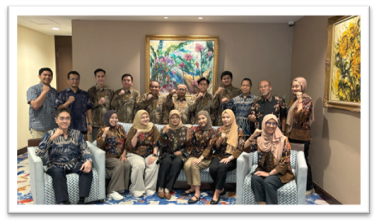
Project Management Unit FOLU Norway Contribution Phase 1 Team (Aulia: back row, 5th left)

Above: Project Management Unit FOLU Norway Contribution Phase 1 Team. Aulia: back row, 5th left

The Forest and Other Land Use (FOLU) Net Sink 2020 Norway Contribution Phase 1 is a significant initiative. Can you tell us what the project involves and what it aims to achieve?

This initiative is part of a bilateral climate cooperation between Indonesia and Norway. It is implemented under a results-based contribution model in which Norway provides funding only after Indonesia delivers independently verified greenhouse gas emission reductions in the forestry and land-use sector.

Phase 1 involves a USD $56million contribution tied to emission reductions achieved during the 2016–2017 forest year. The funds are managed through the Indonesian Environment Fund (BPDLH/IEF) under strict measurement, reporting, verification, and safeguard guidelines.

The broader goal is to support Indonesia’s FOLU Net Sink 2030 target, which aims to transform the forestry and land-use sector into a net carbon sink by 2030 (meaning it will absorb as much, if not more, greenhouse gas than it emits). To help achieve this, the project aims to reduce emissions from deforestation and degradation, enhance carbon sequestration by rehabilitating degraded lands and protecting peatlands and mangroves, support biodiversity conservation, strengthen governance and engage local communities.

What first sparked your interest in the forestry industry, and what has kept you passionate about it over the years?

My interest in forestry was first sparked by a simple but powerful realization; forests sit at the intersection of nature, people, and the future. They regulate water, store carbon, sustain biodiversity, support livelihoods and shape cultures, with few sectors carry such a long-term responsibility where decisions made today can echo for generations.

Over time, I saw clearly the difference between well-managed and poorly managed landscapes. When science, local knowledge, and ethical governance align, outcomes improved. When they did not, the consequences were significant. Seeing that contrast made forestry feel less like a job and more like a calling.

Forestry continues to engage me because it now plays a central role in climate policy and sustainable development. It requires a mix of hard science and respect, rigorous analysis, practical coordination, and long-term thinking. The challenges within forestry have grown, but so too has its importance. Knowing that your work may protect a watershed, reduce future disasters, or leave a healthier forest for the next generation is a powerful motivator.

Since COVID, I have also been writing my autobiography as a reflection on my personal and professional journey.

What drew you to the University of Canterbury for your Master of Forestry Science and PhD studies?

I chose the University of Canterbury because it was the only university in New Zealand offering a professional forestry degree, and the way UC treated forestry, ecology, economics, and policy as interconnected disciplines, rather than separate silos, really appealed to me. UC also emphasized independence, critical thinking and academic consistency. This research culture challenged me to mature not just academically, but also intellectually, something that I really value and continues to shape how I approach forestry, climate policy and sustainability today.

For my PhD, I developed a regional planning framework for industrial forest plantation development in Indonesia using interactive Multi-Objective Decision Making (MODM) models, specifically MINMAX and MINSUM goal programming. The framework analysed trade-offs across production, social, economic, environmental, and location factors. I also integrated financial criteria such as IRR and NPV through a minimum economic size model.

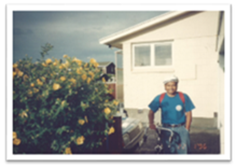
Aulia with his bicycle, car and rental flat (1992)

Above: Aulia with his bicycle, car and rental flat (1992)

Secondly, New Zealand itself offered a living laboratory in which to study - its landscapes, conservation framework, indigenous Māori perspectives, and evidence-based policymaking provided a rich setting to study how science translates into real-world decisions. New Zealand is also a country with no snakes, clean water, beautiful landscapes, a stable government and fantastic hospitality!

Finally, do you have any reflections or favourite memories from your time at UC that you’d like to share?

I spent seven and a half years at UC. I fondly remember long research hours, weekly postgraduate meetings, and many discussions with fellow students from Africa, Asia, North America, and elsewhere. Those exchanges sharpened my thinking and broadened my perspective.

UC helped to give me a sense of perspective, one in which I learned the value of stepping back - of seeing research not as an isolated task, but as part of a larger journey. UC instilled in me patience, discipline and resilience, learnings that have stayed with me long after graduation.

There were technical setbacks during my modelling work, but persistence and peer input helped resolve them. I completed my PhD after addressing written comments from my examiners, Dr Bruce Manley from New Zealand and Dr Neil Byron from Australia, and I passed with minor revisions and a Grade B. I also appreciated the supportive culture within the School of Forestry, particularly from my supervisors Dr Graham Whyte and Dr Ted Bilek, and from Professor Geoffrey Sweet, and Professor Roger Sands.

Professor Sweet and his lovely wife Margaret used to invite all the overseas postgrads and their families to their home for Christmas lunch or dinner each year. Their incredible generosity has always stayed with me and is one of my fondest memories.

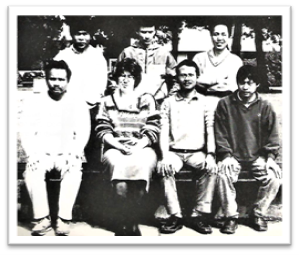
Overseas Postgraduates – the School of Forestry (1989) (Aulia: front row, 1st left)

Above: Overseas Postgraduates from UC's School of Forestry (1989). Aulia: front row, 1st left

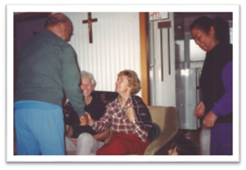
Aulia’s parents-in-law giving Ulos Batak (prayer and hopes) to Professor Sweet and wife Margaret (1993)

Above: Aulia’s parents-in-law giving Ulos Batak (prayer and hopes) to Professor Sweet and wife Margaret (1993)

More alumni stories
Privacy Preferences

By clicking "Accept All Cookies", you agree to the storing of cookies on your device to enhance site navigation, analyse site usage, and assist in our marketing efforts.