
Menu

Wananga Landing
Profile image
Topic

Energy and Carbon

16 October 2026

UC is working to reduce and ultimately neutralise its carbon emissions, in line with the aspirations of our students and staff, our partners and communities, and Aotearoa New Zealand’s commitments to the United Nations Sustainable Development Goals. We want to be part of the solution to the climate emergency.

HOW TO APPLY

Environmental sustainability is a core pillar of UC’s Strategic Vision 2020–2030. UC’s work includes reducing greenhouse-gas emissions associated with its operations and selected supply-chain activities, improving the efficiency and resilience of its buildings and infrastructure, and contributing research, teaching and partnerships that support a more sustainable future.

Since the mid-1990s, UC has maintained an energy-efficiency programme targeting energy and carbon reduction initiatives. UC maintains a strategic objective to become net carbon neutral by 2030. Achieving this will require continued energy-efficiency improvements, responsible management of travel and other indirect emissions, and a reliable long-term pathway away from coal for campus heating. UC is working towards these goals by:

  • Developing a reliable, financially sustainable lower-emissions heating solution for the Ilam and Dovedale campuses.
  • Progressively renewing inefficient plant and improving the thermal performance of existing buildings.
  • Adopting lower-carbon alternatives in the development or replacement of existing fossil-fuelled plant and equipment.
  • Implementing a structured Energy Management strategy adopting regular monitoring, reporting and verification of greenhouse gas emissions and energy consumption from targeted energy management actions.

Energy Review and Action Plan

Energy review

The University undertakes an annual energy review to inform operations and identify opportunities for energy reduction and management. The total energy consumption figures for Ilam and Dovedale Campus operations for 2025 and previous years is presented below:

Ilam Campus202520242023
Electrical Energy Consumption (kWh)23,056,52823,163,22722,889,882
Boiler Fuel Energy Consumption (kWh) 26,949,29932,652,39128,937,786
Energy Use Intensity (kWh/m²/yr)227.60254.04235.89
Dovedale Campus202520242023
Electrical Energy Consumption (kWh) 2,767,340 2,557,637 2,561,016
Boiler Fuel Energy Consumption (kWh)  1,502,403 1,786,354 1,844,922
Energy Use Intensity (kWh/m²/yr) 209.14 212.78 215.81

2027 Energy Action Plan

In 2025, a significantly more detailed energy review exercise was undertaken to inform the next iteration of UC energy efficiency programme of targeted energy reduction projects. The identified energy management opportunities will be implemented, monitored and reported through a structured energy management programme. This work follows recognised energy management and measurement principles and prioritises reducing avoidable demand. Current and planned initiatives include:

  • Optimising building operating schedules implementing adaptive pre-conditioning and demand control period response behaviours where feasible.
  • Renewing inefficient pumps and fans and adopting modern proportional pressure control logic / demand-based control.
  • Recommissioning heating, cooling and ventilation systems which have drifted away from as-installed settings over time.
  • Machine learning and data analytics to identify excess building energy use and operational issues from BMS raw data.
  • Improving heating-network insulation, flow control and operating efficiency, boiler re-turning and combustion sensing improvements.
  • Strengthening energy information and accountability for campus users and tenants.

Greenhouse Gas Emissions

UC’s 2025 GHG emissions inventory and Inventory Management Plan have been submitted for independent verification under the Toitu Carbon Reduce Programme.  The independently verified inventory and plan will be available in early 2027.

UC’s 2024 greenhouse gas inventory reported gross market-based emissions of 14,426.97 tCO₂e. This was 54.5% below UC’s 2010 base-year result of 31,679.24 tCO₂e and 20.12% lower than the previous year’s result of 18,061.11 tCO₂e
Emissions category

2024 Emissions (tCO₂e)

Share of gross emissions

Direct emissions, including fuels used for campus heating and vehicles, refrigerants and other gases

6,318.44 

43.8%

Purchased Electricity (market-based)

0

0%

Indirect transportation emissions, including business travel, accommodation and freight

7,309.18

50.7%

Indirect emissions from products and services used by UC

799.35

5.5%

Total gross market-based emissions

14,426.97

100%

Transportation and direct emissions were UC’s two largest emissions categories in 2024. Campus heating was the main source of direct emissions, while UC-funded air travel was the main source within transportation emissions.

Renewable Energy Certificates

UC purchases Renewable Energy Certificates issued through the New Zealand Energy Certificate System. These contractual instruments allow qualifying electricity consumption to be reported as zero emissions under the market-based Scope 2 methodology.

Location-based reporting reflects the average emissions intensity of electricity supplied through the national grid and remains an important measure alongside market-based reporting. Renewable Energy Certificates reduce UC’s reported market-based Scope 2 emissions; they do not reduce the amount of electricity consumed.

Transport

Business travel remains one of UC’s largest indirect emissions sources. The 2024 inventory reported 7,309.18 tCO₂e of transportation emissions, which was a slight reduction from the 2023 result of 7,437.64 tCO₂e.

Air travel is responsible for most of UC’s travel related emissions and there has been a continued focus on these emissions. Preliminary reporting for 2025 indicates a significant reduction of 1,110 tCO₂e in air travel related emissions, despite growth in staff and student numbers.

Toitū Carbon Reduce Certification

UC is in its 16th year of measuring and managing its GHG Emission via the Toitū Carbon Reduce Programme since establishing its 2010 base-year inventory.

Toitū certification involves measuring and planning reductions in greenhouse gas emissions arising from the University’s activities. 

See UC's most recent carbon disclosure statement here.

Lower-Carbon Campus Heating

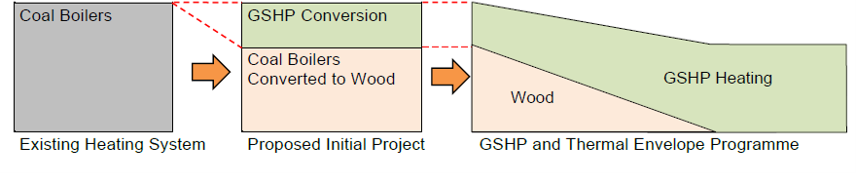
UC’s Low Carbon Energy Strategy (2020–2025) supports a transition from coal-fired heating at Ilam Campus to lower-carbon alternatives. It combines biomass conversion of the existing boiler plant with a complementary ground-source heat-pump system to help meet remaining heating demand.

Ilam Boiler Biomass Conversion

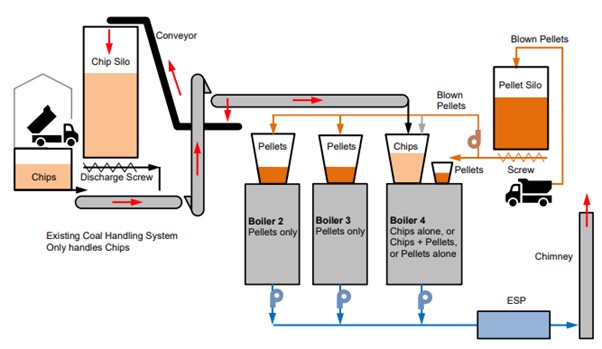
The existing boilers and fuel handling systems were adapted for woodchip, with a new wood pellet transfer system and two additional storage silos to supplement the existing fuel storage. Boiler 4 acts as the primary boiler for Campus and operates on woodchip with Boilers 2 and 3 providing emergency back-up and seasonal low-load operation. A high-voltage electrostatic precipitator has reduced particulate emissions by 93%. 

The boiler conversion was completed in time for the start of 2024 and has operated on biomass fuel for two heating seasons. However, ongoing plant-reliability issues and biomass supply-chain constraints mean coal has not yet been eliminated from campus heating.

Biomass contribution and emissions avoided:

  • In 2024, biomass supplied 52.8% of Ilam boiler fuel energy, avoiding an estimated 4,824 tCO₂e compared with coal.
  • In 2025, biomass supplied 14.8% of Ilam boiler fuel energy, avoiding an estimated 1,117 tCO₂e compared with coal.

UC remains committed to moving away from coal and is investigating a long-term solution that can deliver reliable, low- to zero-carbon heating across the Ilam and Dovedale campuses.

Science Precinct Ground-Source Heat Pump

The Science Precinct ground-source heat-pump (GSHP) system provides space heating and cooling for five UC buildings that have been retrofitted for low-temperature heating.

The system includes three 1.2 MW water-cooled heat pumps connected through an indirect groundwater system. Each heat pump can absorb heat from, or reject heat to, the ground and the building heating and cooling circuits.

In heating mode, the system extracts heat from the campus chilled-water system. When cooling demand is insufficient, heat exchangers extract heat from groundwater bores. In cooling mode, the heat generated is used to meet Science Precinct heating demand, with any excess heat returned to the ground.

In its first full year of operation in 2025, the system:

  • supplied 3,524.9 MWh of useful heating
  • supplied 1,082.7 MWh of useful cooling
  • used 1,258.8 MWh of electricity
  • achieved a total system coefficient of performance of 3.66

Supplying the same amount heating using the previous coal-fired baseline would have produced an estimated 1,484.7 tCO₂e.

The first year of operation included commissioning, and electrical and operational interruptions. UC continues to optimise the system’s performance, which is expected to improve as utilisation increases.

Privacy Preferences

By clicking "Accept All Cookies", you agree to the storing of cookies on your device to enhance site navigation, analyse site usage, and assist in our marketing efforts.