

Menu

Wananga Landing
Profile image
Wananga Landing
Young alumni

Sarah Valintine

21 April 2026

Bachelor of Sports Coaching 2025

Assistant Coach, Boccia NZ

HOW TO APPLY

A passion for sport, community, and the outdoors set Sarah on a path that’s already making an impact. Introduced to boccia during her studies at UC, she quickly found a calling in one of the world’s most inclusive sports. Now an Assistant Coach with Boccia NZ, Sarah works alongside athletes with complex impairments, helping them perform at the highest level while continuing to learn, adapt, and grow in a dynamic high performance environment.

What inspired you to study sports coaching?

The short answer: Community, my love for sport and the outdoors, and those who’ve enabled me to pursue lots of sports, but mostly a fear of sitting down all day.

The sense of community sport creates is like no other. I began my journey in sport back at home in Taranaki. The way people travelled from small communities all over the region to get involved and help put on a good day of grassroots sport was pretty cool.

My family was supportive and proactive when us kids showed an interest in anything. Team sports, bike riding, anything outdoors, and walking/running events were popular in our house. Despite having four kids wanting to do so many different things, Mum and Dad always made sure we all got there on time with everything we needed and someone to support us. I’ve also had some awesome coaches, teachers and mentors who’ve left a lasting impact which continues to drive me forward.

My positive view towards sport and exercise stems from these people and communities. They really inspire me to help others have a positive experience with sport and physical activity, and to help keep them in it for as long as possible.

You were introduced to boccia through your studies at UC. Can you tell us how that opportunity came about, and how you’d explain the sport to someone encountering it for the first time?

In 2024, an email popped into my inbox calling for interest to help Boccia NZ and one of their athletes with some coaching. I didn’t even know what boccia was (or how to say it)! After doing some research on it, I sat on the thought for ages and ended up responding pretty last minute. I’m very stoked that I did! (FYI - to pronounce the word boccia, it's like ‘gotcha’, but replace the G with a B. You’re welcome.)

The first thing anyone should know about boccia (aside from how to say it) is that it’s one of the world’s most inclusive sports. Boccia was designed specifically for people who have a moderate to severe physical impairment (most commonly cerebral palsy), making it one of only two Paralympic sports not adapted from an Olympic counterpart. 

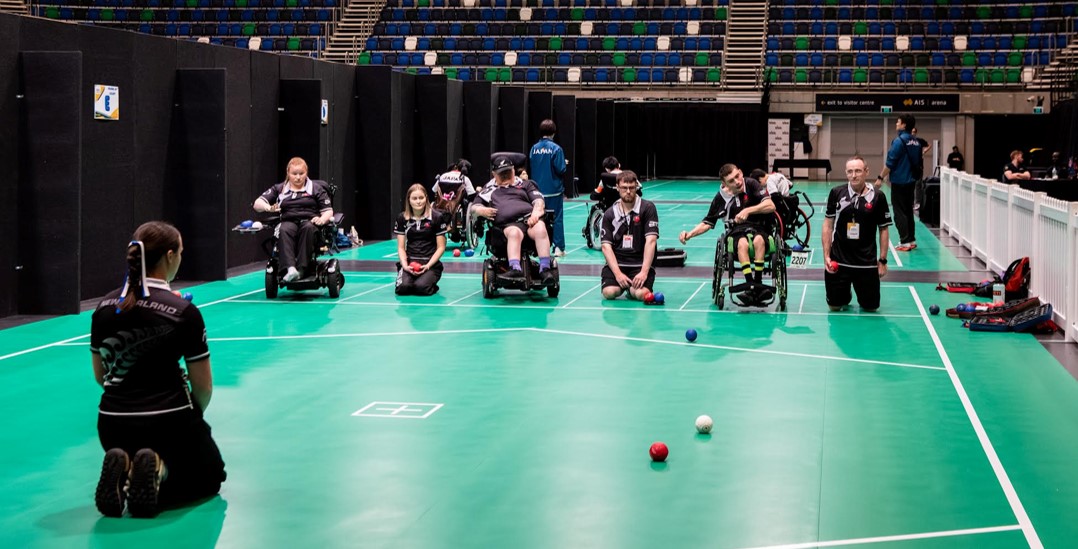
The actual game itself is a precision ball sport. Players aim to get their coloured ball closest to the white target ball (the jack) to score. It’s very technical - the smallest of margins can flip the game on its head. Boccia is played from a seated position, and players propel their ball onto the court by throwing, kicking or using a ramp. Each player has a certain number of balls per end and is under time pressure to release them all.

That initial involvement grew into a role as Assistant Coach with Boccia NZ. What does that role involve, and what have you enjoyed most about stepping into that position?

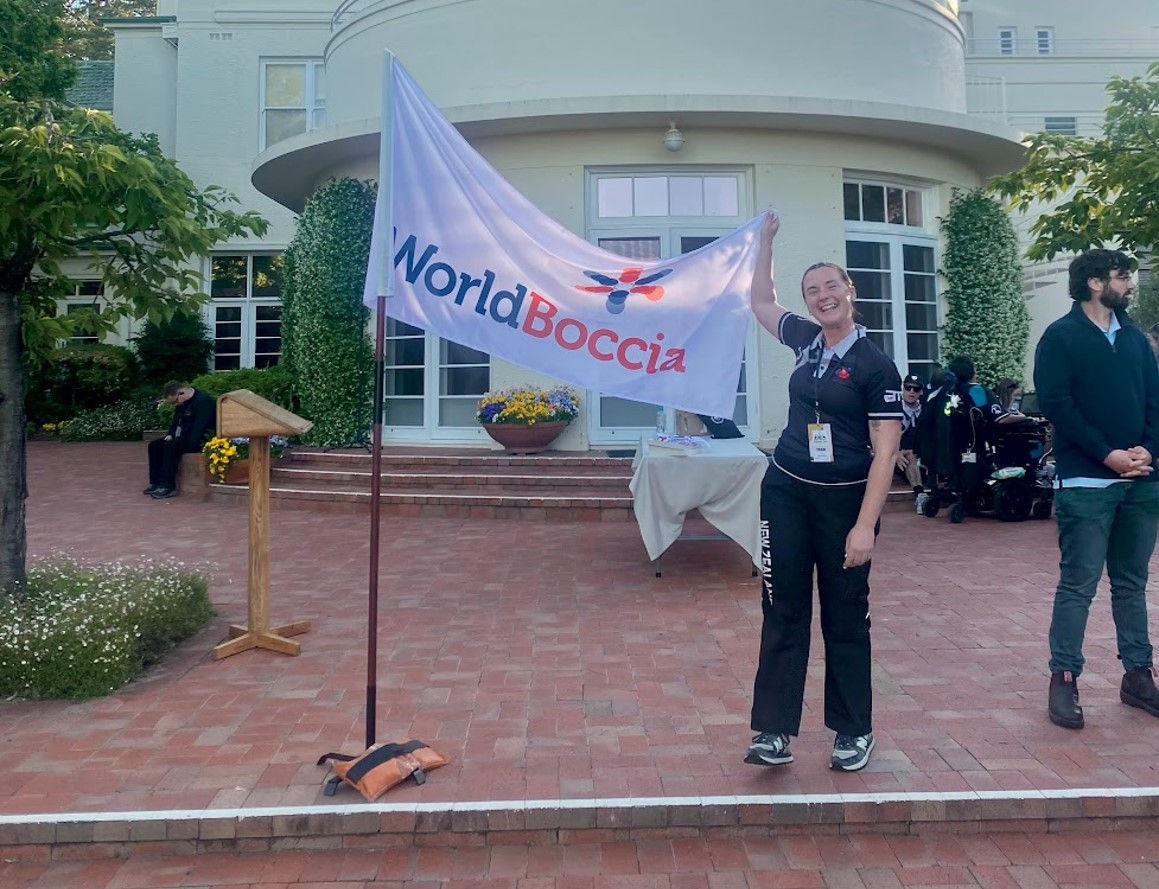
My role has quite a wide scope! Last year, I worked with the BC1/2 team preparing for the World Boccia Challenger in Canberra. Being so green, I used weekly training as an opportunity to ask heaps of questions, experiment and study the athletes. I owe much of my learning to the head coach, Trevor, the athletes and their support people. The most valuable part was actually getting to play the game. It gave me a unique point of view, which really helped with coaching. 

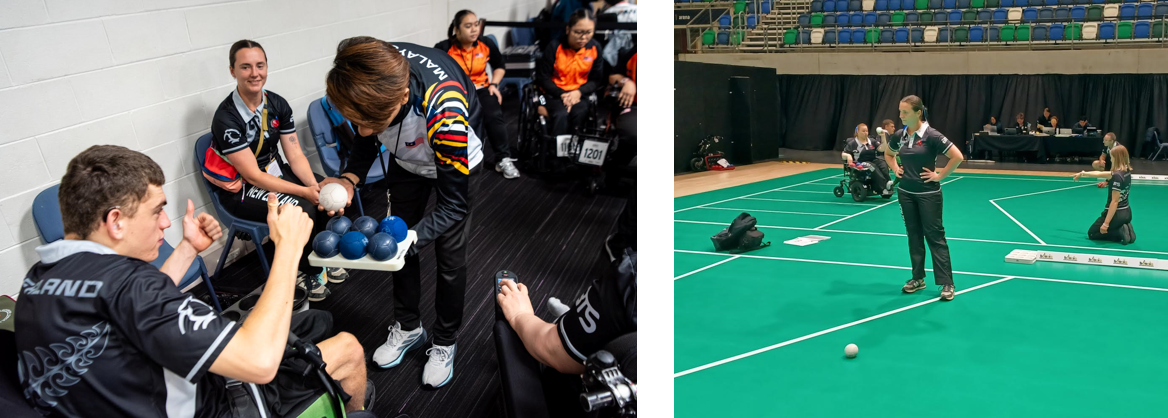
Coaching at the World Challenger was full on, but it was the best learning experience I could have had. Think about the typical jobs of a coach - I do all of that stuff, but my role doesn’t stop there. Behind the scenes there are lots of meetings, logistics and planning, late nights and early mornings, and sometimes assisting with athlete care.

The thing I have enjoyed most about stepping into the assistant coach role is the challenges each day presents. Cerebral Palsy is so complex! No two individuals with CP are the same. Lots of out-of-the-box thinking, patience, research and experimenting is required to figure out the best way forward for each athlete.

What has working in this space taught you about inclusion and accessibility in sport?

There truly are no boundaries to sport at any level - including at the highest. Boccia is the only sport that some people have the ability to play. These athletes are a raw display of resilience, integrity and perseverance. They have every reason to not play sport because they’re in a wheelchair with a complex impairment. Instead of seeing that as a barrier, they use it as their reason to play. To me, that speaks volumes and I think we can all take a leaf from their book.

The boccia community is full of support people, volunteers and coaches who actively work to provide as many opportunities to their athletes as possible. I’d liken it to the small sport communities at home which I talked about at the beginning. Quite full circle, really!

If you had to describe your UC experience in one sentence, what would it be?

Eye opening, challenging, and changing!

Finally, what's on the cards for you in 2026?


2026 is looking pretty epic. I am continuing as part of the coaching team. This year, I’ll be coaching at two international events! One in Pilsen, Czech Republic and the other in São Paulo, Brazil. I’m really excited to rip into training and see how our athletes develop over the year. There’s also cool things brewing in the research space looking at throwing biomechanics. Big things are coming and I’m fizzing!


More student stories
Privacy Preferences

By clicking "Accept All Cookies", you agree to the storing of cookies on your device to enhance site navigation, analyse site usage, and assist in our marketing efforts.