
I come from a lineage of women who defined leadership for me. My mother worked in the Egyptian Cabinet, working long hours with presence and integrity. My grandmother worked on development programmes with UNICEF and the National Council for Women. From them, I learned that leadership is not dominance — it is responsibility and making people feel seen.
What drives me is how broken systems take away young people’s ability to dream. When survival becomes the priority, dreaming feels like a luxury. Youth empowerment is about restoring that possibility — and trusting young people with real influence, not symbolic inclusion.
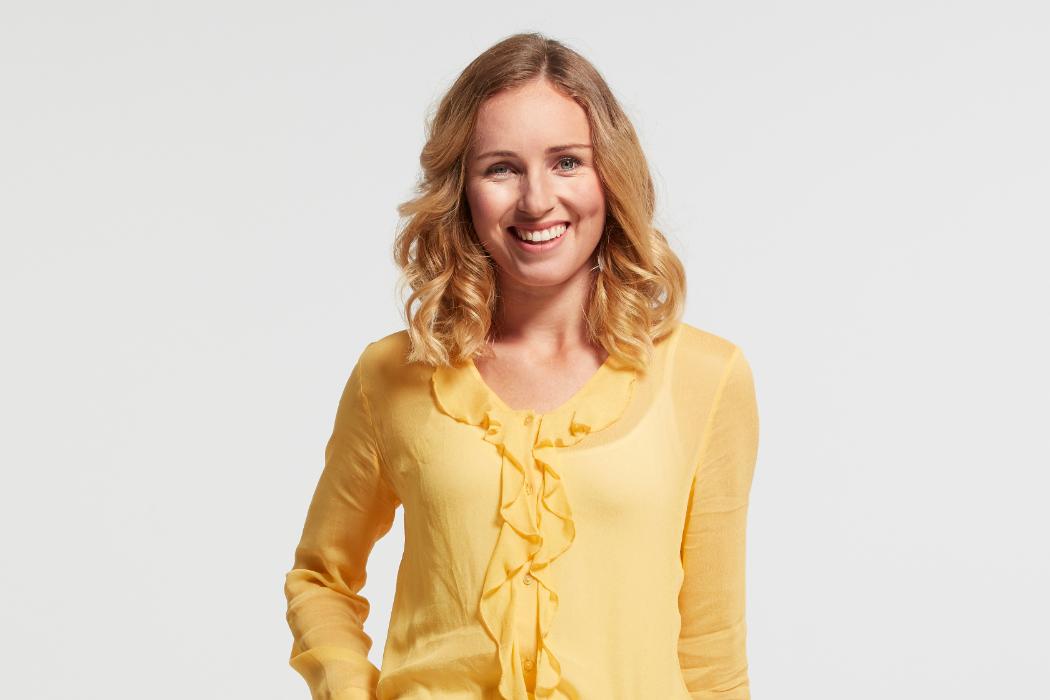
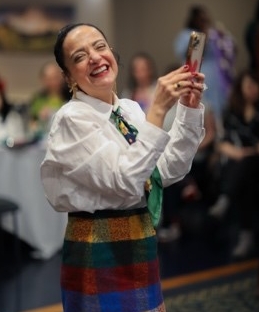
Driven by a deep commitment to gender equity, youth empowerment and global responsibility, Anne Joseph has built a career grounded in advocacy, diplomacy and people-centred leadership. From founding a global women’s empowerment platform to contributing across humanitarian and UN organisations, she reflects on the moments, mentors and convictions that continue to shape her work.
What first inspired your commitment to gender equity, youth empowerment and global diplomacy?
I was 15 years old when the Yazidi genocide changed how I understood justice. Because of the complex layers of this crisis, I followed the case closely, and what struck me most was not only the brutality, but the silence and slowness of the global response. Watching an entire community suffer while accountability stalled was my aha moment — when human rights stopped being abstract and became urgent. I began using social media to speak about the Yazidi genocide alongside other emerging issues around gender equality and the protection of vulnerable communities, long before digital advocacy became mainstream.
That moment shaped everything that followed. It led me to study international relations and political science, and later to pursue a master’s degree with a strong humanitarian focus grounded in protection, accountability, and global responsibility.
Could you share a bit about your career so far?
Today, I am the founder and podcast host of Yes Girl You Can, a global women’s empowerment platform and podcast available on Spotify and iHeartRadio. In just its first six months, the platform has reached listeners in 22 countries across four continents and continues to grow through our community on Instagram, @yes_girlyoucan. I created Yes Girl You Can to honour women’s small wins and the process of becoming, especially in a world driven by hustle culture and curated highlight reels. It centres slow days, ordinary progress, and sustainable growth, creating spaces where women feel seen rather than rushed.
Alongside this work, I am actively building my career in global diplomacy and gender equality through roles within NGOs and government. My career began in the NGO and civil society space, grounding my understanding of global diplomacy in people and lived experience. My first role was as a face-to-face fundraiser for Doctors Without Borders, followed by work across organisations including Amnesty International, the Red Cross, UN Women, and the United Nations Association of New Zealand, contributing to advocacy, protection, and public engagement initiatives across the humanitarian and human rights space.
A highlight of my career was joining UN Women Aotearoa New Zealand as part of its inaugural Taskforce Empowerment cohort, and later as an intern. The mentorship I received from senior leadership and board members was formative and continues to shape how I approach advocacy, leadership, and movement-building. One lesson that has stayed with me is the importance of asking for what you need — advice I would give my younger self and any woman who is pursuing her dreams.
Later in 2025, I was awarded to be part of the Y25 cohort. The Y25 recognises 25 of the most influential young women across the motu, and this experience enriched me with so much inspiration through meeting wahine from different fields and across every role - the consistent thread being people-centred work. I am now pursuing international roles to continue contributing to humanitarian action and gender equality at a global level.
Has there been a moment recently that affirmed “yes, this is why I do this work”?
Recently, I have been reminded why I do this work through conversations with young women who tell me they finally feel seen in spaces that so often speak about women rather than with them — particularly through listening to Yes Girl You Can. In the humanitarian and diplomatic space, when young women reach out to me for mentorship and advice on pursuing this field, it is always a profound honour to support emerging leaders in finding their voice and direction.
These moments are not marked by formal milestones or public recognition, but they reaffirm that impact does not always look loud or immediate. This work matters because it creates spaces where people feel safe, valued, and able to step into their own agency. That sense of presence and trust is what keeps me grounded in this field.
At the same time, witnessing emerging global challenges continues to fuel my commitment. It is deeply difficult to watch communities suffer when leadership fails to listen or be held accountable. As I reflected in my address at the Young Leaders Summit in Paris in 2024: “Too often, the leadership we depend on — those who hold the levers of power — treat our efforts as props in a play that serves only themselves. Communities born into broken systems will remain trapped unless those in power choose to listen, act, and be accountable.”
Your roles require empathy, resilience and diplomacy – how do you balance emotional impact and motivation while working on issues that can feel overwhelming?
I don’t believe the answer is detachment. I stay motivated by allowing empathy to guide me, while also being disciplined about rest and reflection. I’ve learned that sitting with complexity doesn’t mean absorbing it all. I focus on what’s within my sphere of influence, celebrate small wins, and stay anchored in community. That balance — feeling without becoming overwhelmed — is what allows me to keep showing up.
Are there any goals or bucket list things you want to achieve in the next few years?
Over the next few years, my goals are centred on growth, impact, and connection. I want to continue building Yes Girl You Can and showing up consistently for the community — our message around slow progress, small wins, and becoming feels deeply needed, and I’m really excited to be launching season two of the podcast soon.
I also want to keep travelling and immersing myself in different cultures, because adapting to new ways of living has been one of the most grounding and expansive experiences of my life. Places like Thailand, the south of France, and Okinawa are next on my list.
Professionally, my goal is to deepen my work in the humanitarian space by consulting on gender equality and human rights in humanitarian and conflict-affected contexts, while also contributing to how emerging technologies are shaped within global diplomatic frameworks. My long-term aspiration is to be in decision-making spaces where policies are shaped by listening to the people most affected — because presence, care, and accountability are at the core of my purpose.
Alongside this, I’m committed to becoming fluent in French, as language is one of the most powerful ways to connect meaningfully with communities and expand the mahi I can do. And personally, I want to continue making memories with my closest friends and spending intentional time with my extended family, because those relationships are what keep me grounded in everything I do.
What memories or experiences stand out from your time at UC?
So many. UC was honestly one of the best experiences of my academic life — and my life in general.
My class was incredibly diverse; it genuinely felt like the United Nations. It was also very female-dominated, which made the learning environment really special. I met lifelong friends there — people who changed my life.
The lectures were genuinely fun, especially those focused on global debates and public diplomacy. One moment I’ll never forget was presenting a public diplomacy project to the Head of Communications at the Ministry of Foreign Affairs. I was presenting on the New Zealand Embassy in Egypt and included a slide about the former ambassador’s love for mangoes, which had gone viral across Egypt. The whole room burst out laughing.
There were also the chaotic moments — like losing a page of notes in the middle of my notebook during a group project and spending ages searching through everything before just laughing it off with the team.
Writing my thesis under Professor Jeremy Moses was another standout experience. It pushed my thinking and shaped how I work today.
Overall, UC gave me confidence in my voice, lifelong friendships, and memories I’ll always carry with me.
.jpg)