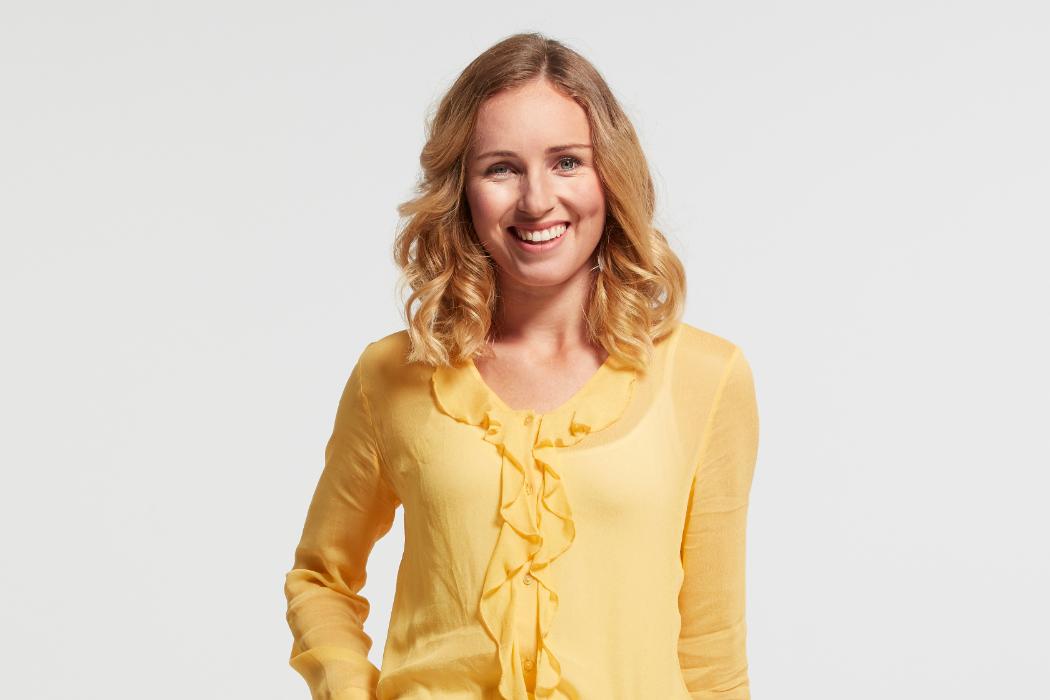
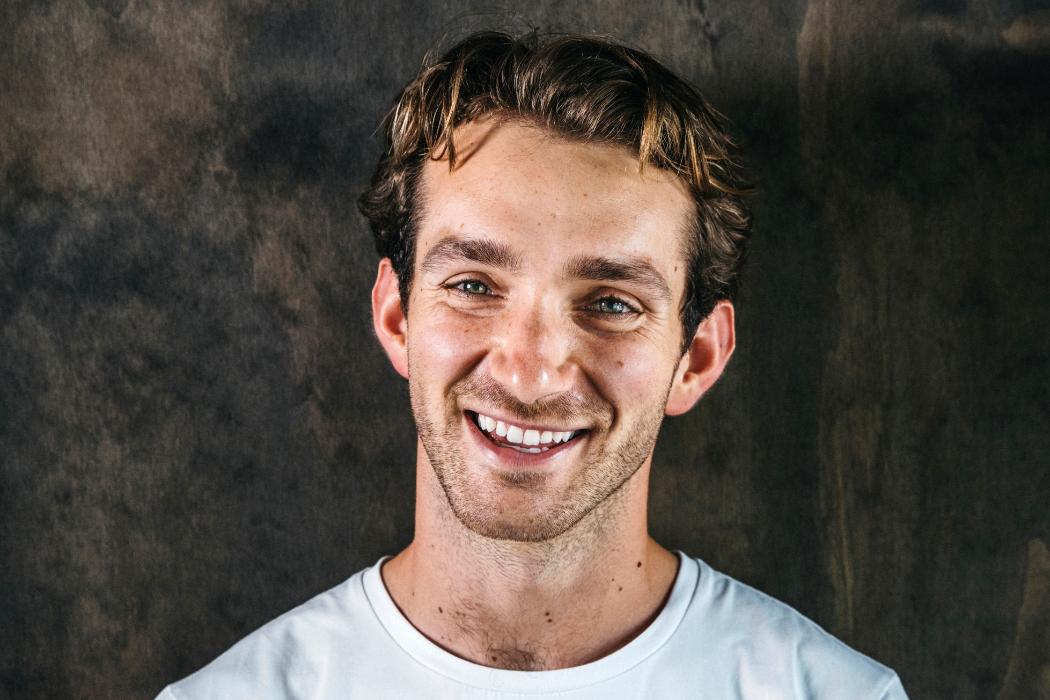
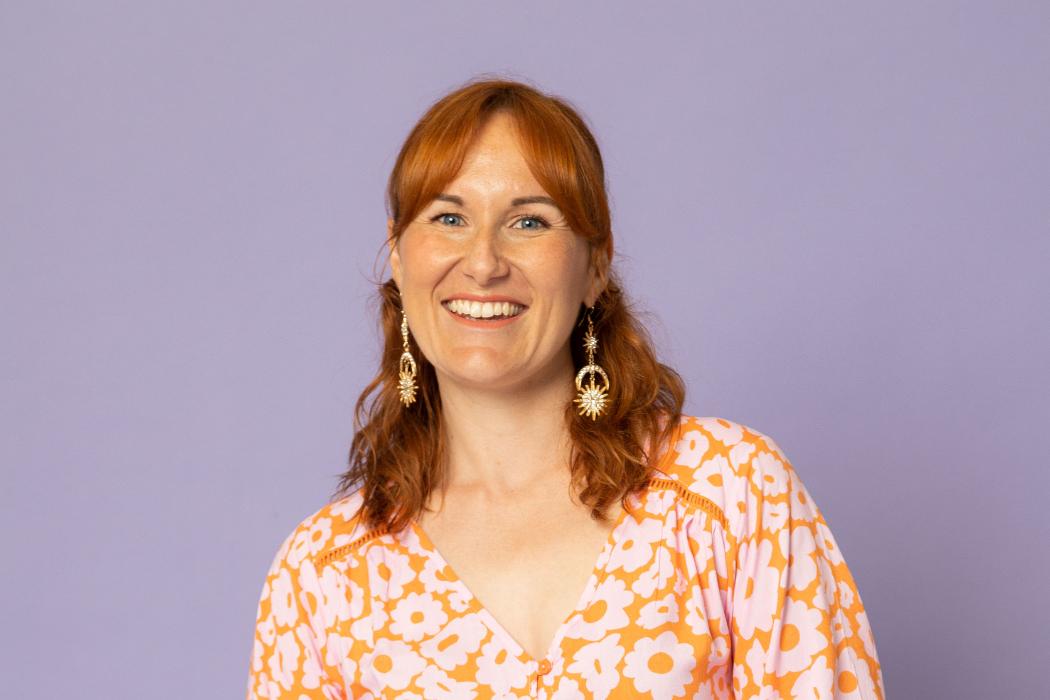
Choosing the scenic route has defined Elizabeth's journey. From studying the mathematics of ice flows to sailing across the Pacific and working in oceanographic research, their path ultimately led to a role where science and sailing meet with Emirates Team New Zealand.
What first drew you to pursue mathematics at UC?
My path to UC actually started at age 14, when I began attending on-campus screenings of the TV show Numb3rs. The professor hosting those sessions arranged for a 45-minute lecture after each episode on the mathematics used in the show. He eventually became my PhD advisor and I’ve now known him for almost half my life. That early connection, combined with the Math199 STAR programme in my final year of school, made continuing at UC a very logical and easy decision.
Your PhD research focused on ice flows – could you give us a layperson's understanding of your thesis? How did this lay the foundation for your later research and career?
My thesis was focussed on looking at observations that were easily available at the surface of the ice flow and then using them to work out what was happening beneath the surface. I was specifically interested in how the ice was sitting on the ground underneath and whether this interface was sliding or sticky. Approaching this through a mathematical lens gave me the tools to model fluid dynamics and inverse problems, skills that turn out to be surprisingly applicable to both ice flows and sail boats.
In 2023 you took a full year away from research to sail across the Pacific from New Zealand to Japan with your father. What motivated you to step away from academia to take on this challenge?
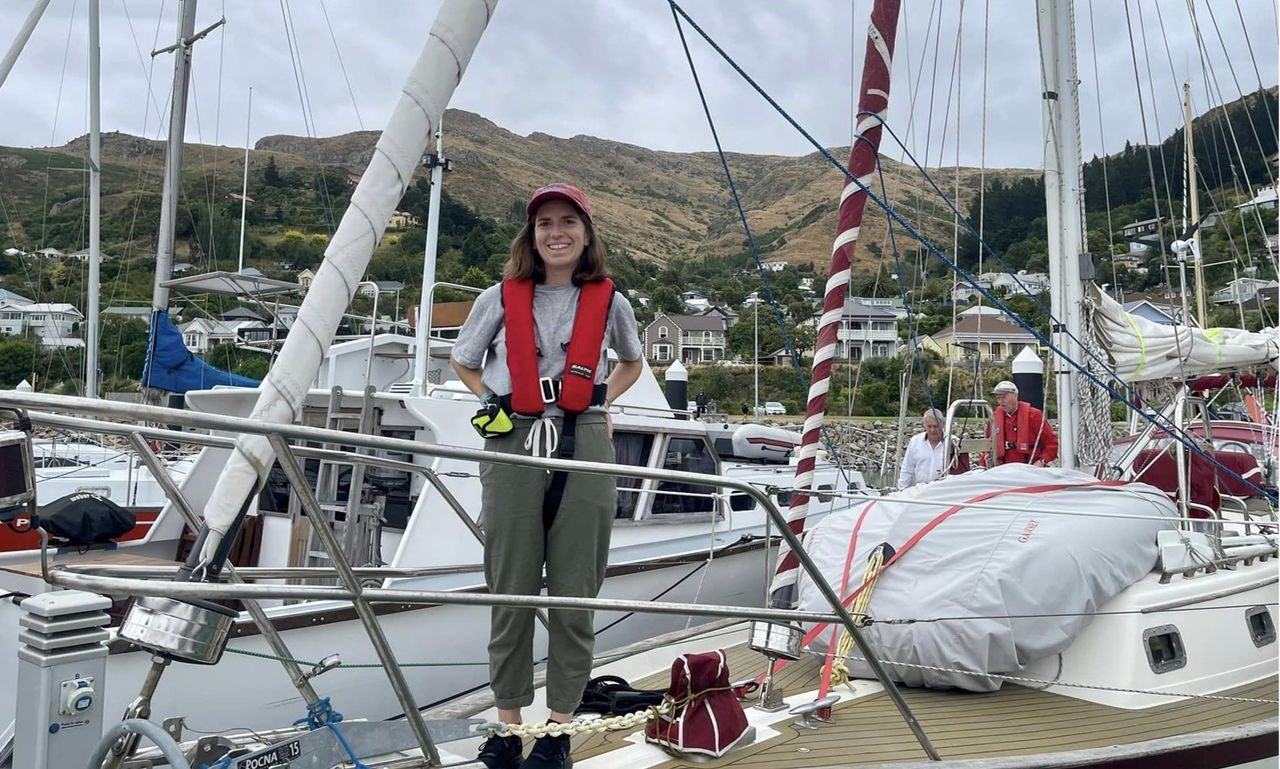
I’ve always enjoyed being on the water, growing up sailing dinghies in Akaroa and Lyttelton harbours. When Dad was struggling to find a crew for his dream trans-Pacific passage, I decided to put my hand up. I knew the timing would align well with the end of my studies and also that I didn’t want to pursue the straight and narrow path. It was time for another challenge!
His dream quickly became my dream too and during the last two years of my doctorate, I balanced writing, teaching, getting the necessary sailing certifications (an education in itself!), and preparing our yacht for offshore sailing. We set sail from Christchurch just a month after I defended my thesis, and I was still completing final revisions as we sailed up the east coast. It was a baptism by fire. New Zealand coastal waters are notoriously tough, and sailing in the aftermath of Cyclone Gabrielle had us thankful for a sturdy hull. We arrived in Whangārei with a chunk of Hawke’s Bay pine literally wedged into the bobstay fitting, exhausted and ready for a month of repairs and restocking.
The ocean passage was no less intense. During the two-month voyage, we skirted two typhoons, including a Category 5 Super Typhoon that forced us to divert from Guam to Saipan after the port there was left with multiple sunk vessels. Between dodging weather systems, we had to deal with fishing nets wrapping around the prop, a broken steering system after our windvane bearing failed, and low morale as the food became increasingly bleak. It was all worth it, however, for the six months we spent exploring the inland sea of Japan, docking in both the heart of Osaka and numerous remote fishing villages. It was an exhausting, humbling, and occasionally terrifying experience, but it gave me a perspective on the world that I never could have found behind a screen.
Was there a project, experience, or moment during your time in the US that stands out as especially memorable or rewarding?
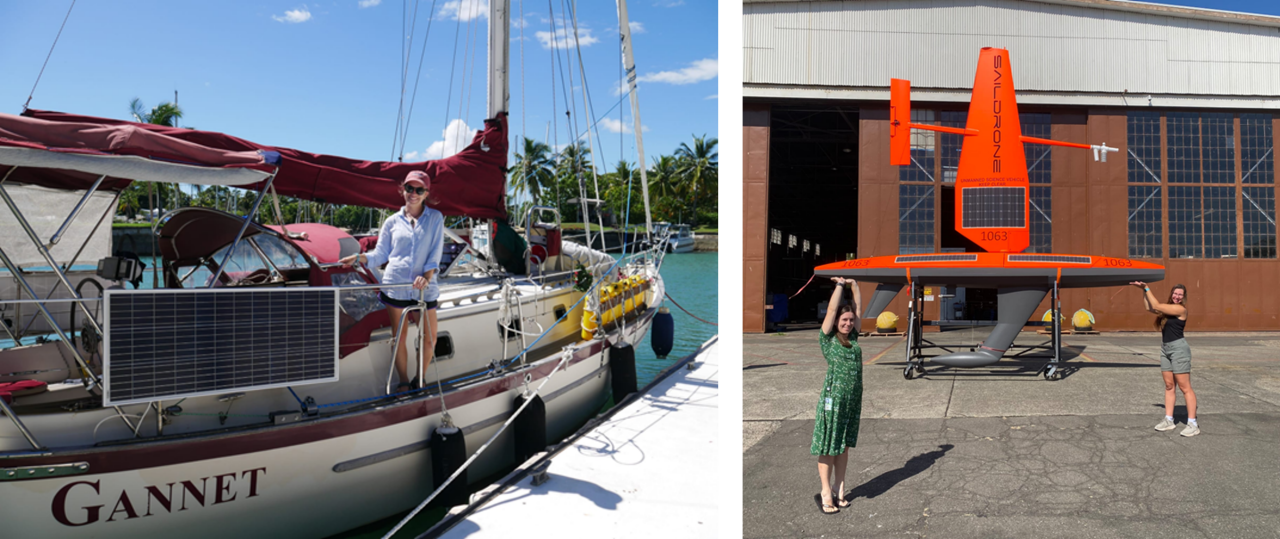
My role in the US was one I hadn’t envisioned for myself when I left New Zealand. When considering my next steps while literally at sea, I decided to throw my name in the ring for research positions in oceanography. Ultimately, I was successful in securing a position at the University of Washington in Seattle. My research there was to investigate the utility of observations, collected by unmanned surface vessels (USVs) in the tropical Pacific, to better understand fine-scale processes affecting El Niño Southern Oscillation forecasting.
One standout highlight was the degree of operational responsibility I was given. In this role, I wasn’t just crunching numbers, instead I was actively managing USV missions in the tropical Pacific with my team. This involved consulting real-time ocean forecasts to decide where to navigate these assets to best capture data that would advance our understanding and forecasting of global climate patterns.
Another unforgettable experience was heading out into the Gulf of Alaska on a research ship to help my team redeploy one of our science moorings. Whether I was resetting sensors, attaching components, or spending two days scraping barnacles off a recovered float (I think my boots still smell a bit), the experience was incredibly rewarding. It gave me a profound respect for the hard work required to generate quality scientific observations.


.jpg)