

The research, led by Professor Girish Prayag from Te Whare Wānanga o Waitaha | University of Canterbury (UC) Business School, examined the environmental attitudes and behaviours of over 600 international visitors to Canterbury. The study compared four generations - Baby Boomers, Gen X, Gen Y and Gen Z - using the New Environmental Paradigm (NEP)* to assess how age and generational identity shape sustainable travel practices.
The findings, published in the Journal of Sustainable Tourism, revealed that Gen Z visitors (those born between 1997 and 2012) were more likely to belong to “Environmental” or “Mixed-Bag Environmental” segments - groups that actively engage in sustainable behaviours such as saving resources and buying local food. However, the study also found notable differences within each generation, suggesting that sustainability values are not uniform across age groups.
“Our research challenges the assumption that younger generations are automatically more environmentally conscious and travel sustainably,” says Professor Prayag. “While Gen Z travellers are more likely to demonstrate sustainable behaviours, our findings show that attitudes toward the environment are complex and influenced by more than just age or generational identity.”
Co-authored by UC colleagues Dr Richard Aquino and Associate Professor Ning (Chris) Chen, with Adjunct Associate Professor Peter Fieger and Professor Michael Hall, the study offers valuable insights for local tourism operators, highlighting the need to tailor sustainability messages to different travellers rather than relying solely on generational trends.
“Understanding the diversity within each generation allows tourism operators to design more effective sustainability initiatives that resonate with travellers’ values and motivations,” says Professor Prayag.
The findings are important because they can help tourism operators, businesses and policymakers design more effective sustainability initiatives that reflect the real attitudes and motivations of travellers, rather than relying on assumptions about age.
The study underscores the importance of moving beyond stereotypes to develop more inclusive and impactful approaches to promoting sustainable tourism so that Canterbury can continue to deliver outstanding tourism experiences to those who come to visit our region.
*The New Environmental Paradigm (NEP) is a framework used to understand how people perceive the relationship between humans and the natural world. Developed in the 1970s by Dunlap and Van Liere, it contrasts a human-centred view — that nature exists primarily for human use — with an ecological perspective that recognises humans as part of a finite, interconnected system. The NEP is widely used to assess attitudes toward environmental sustainability and responsibility.
What to read next
UC celebrates its Manaaki New Zealand scholar
After completing their studies at the University of Canterbury, 15 Manaaki New Zealand scholars are preparing for the next chapter of their journeys.

NZ study reveals gaps in women's heart healthcare
A review of 25 years of New Zealand research has revealed significant gaps in women's heart healthcare, highlighting opportunities to improve diagnosis, treatment and outcomes.

History goes hi-tech at Awaroa Godley Head
The University of Canterbury's HIT Lab is helping Awaroa Godley Head visitors enjoy a more immersive experience of the World War II heritage site.

UC geography graduate honoured for global science leadership
UC alumnus Distinguished Professor Emeritus Iain Hay has received a prestigious international Fellowship recognising his contributions to geography and scientific collaboration.

Are Kiwi businesses jumping blindly on the AI bandwagon?
AI doesn’t have to play an inevitably dominant role in our lives, businesses and future, argues a guest speaker for an upcoming UC public lecture.

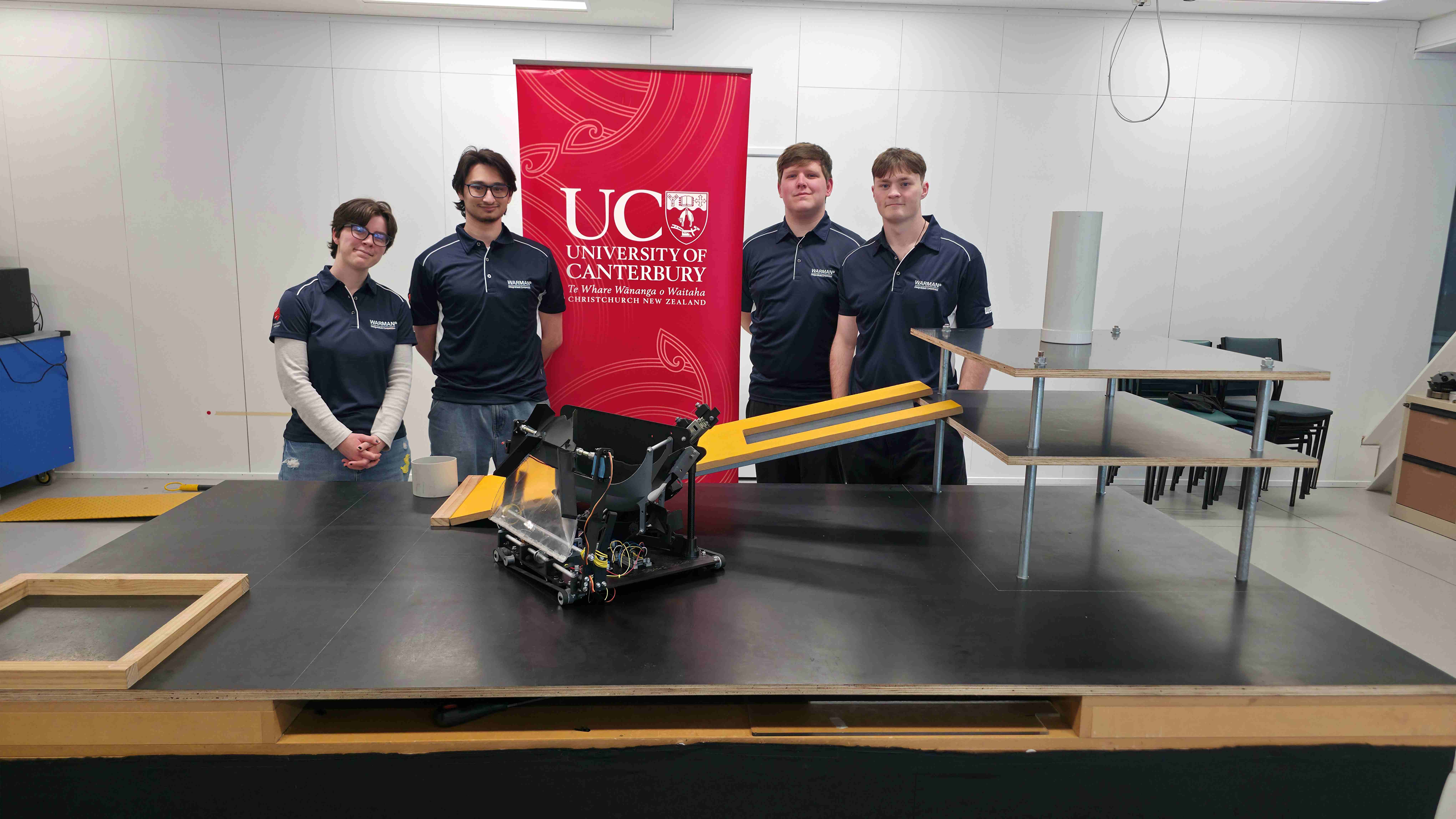
UC engineering students win international competition
A robot designed to transport rocks automatically has helped four UC engineering students claim an international title.
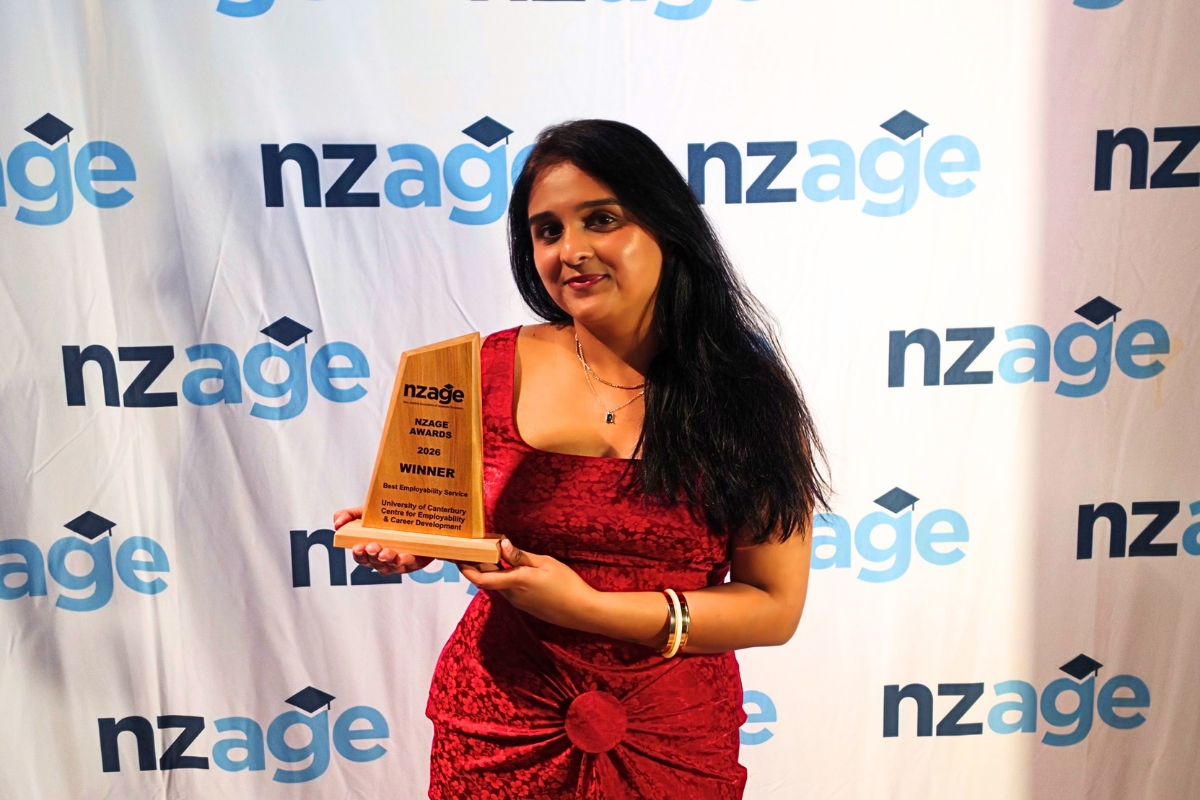
UC wins national award for employability service
UC has been recognised for excellence in helping students develop career-ready skills and connect with employers.
Fair suppliers strengthen business resilience
Businesses are better able to withstand disruption when suppliers make fair decisions and turn strong relationships into flexible action, UC research finds.
Digital models to help predict natural hazards in Kiwi capital
An innovative project using digital simulations to predict future hazards in New Zealand’s capital city takes its name from science fiction.